For years, the humanoid robotics industry has been fueled by venture capital, blockbuster valuations, and carefully staged demonstrations. Now it faces a tougher test: public markets. Agility Robotics’ planned listing could become the first real measure of whether investors believe commercial deployment can justify the industry’s soaring expectations.
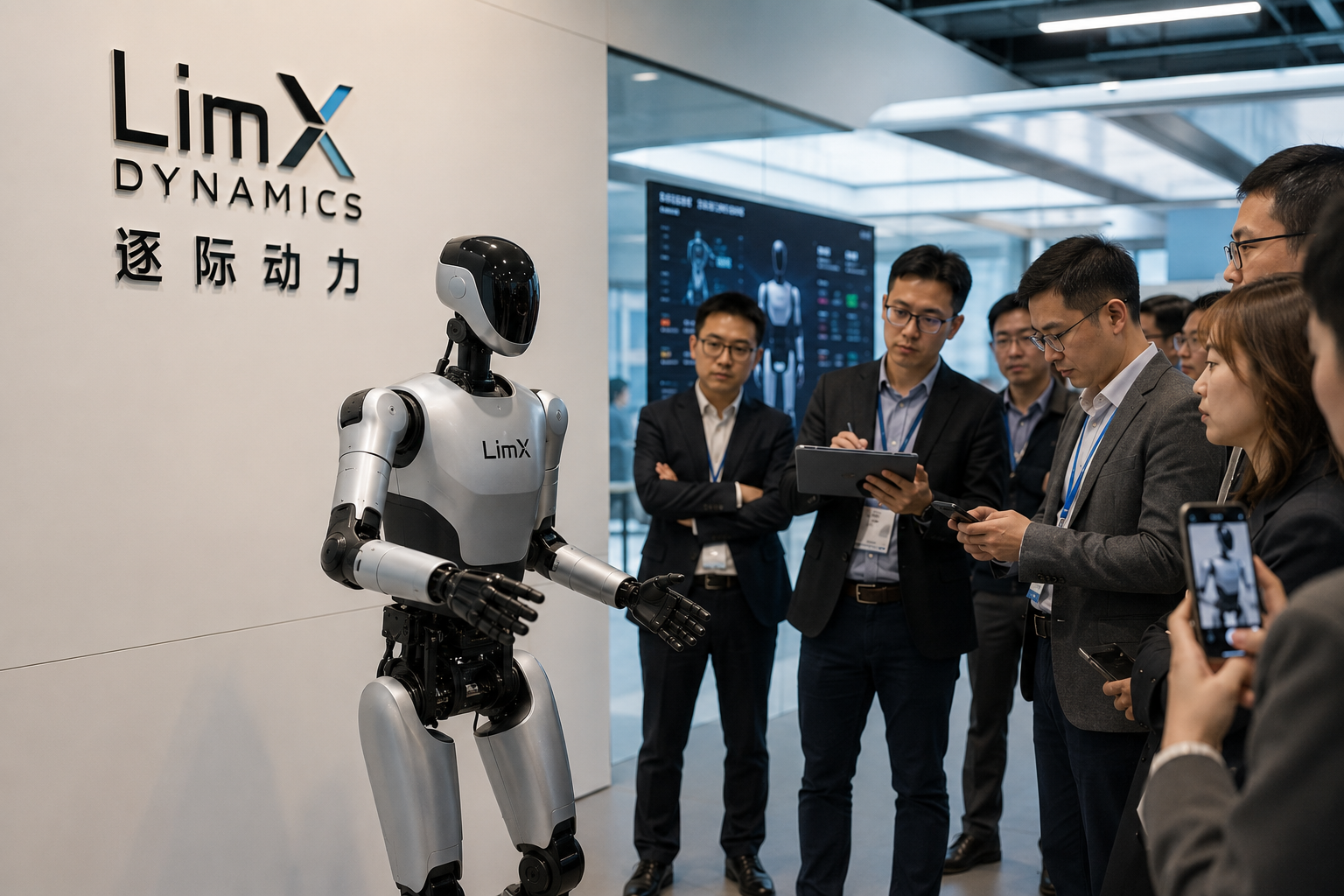
Agility isn’t alone. Unitree Robotics has filed for a Shanghai IPO, while Agibot and EngineAI are preparing listings in Hong Kong. Figure AI, valued at about $39 billion in its last private funding round, has yet to announce an IPO but is widely expected to follow. Together, they mark the beginning of a new phase one in which humanoid robotics companies will increasingly be judged by public investors rather than private capital.
What Agility Is Selling Investors
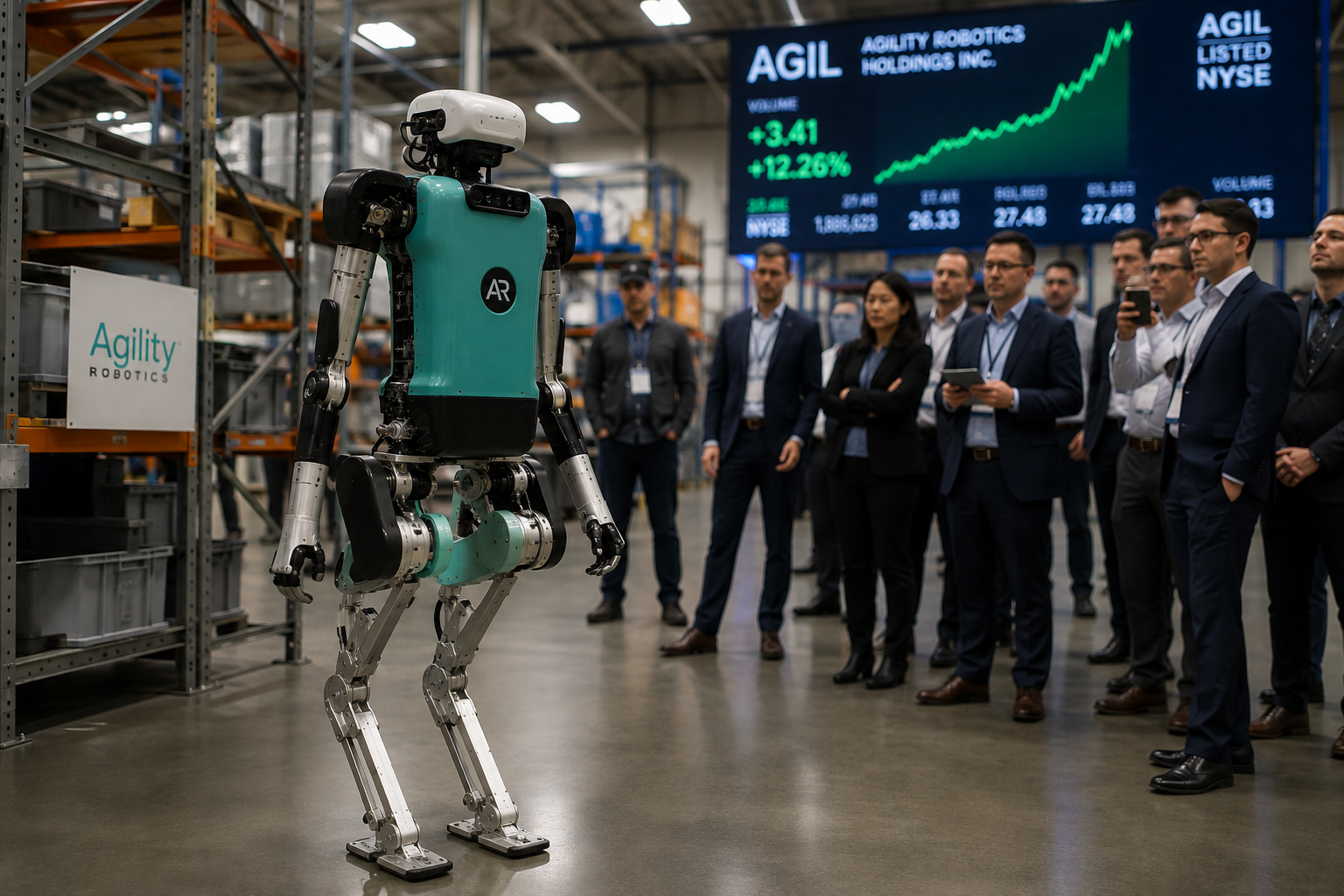
The Churchill merger values Agility at $2.5 billion pre-money and is structured to deliver more than $620 million in gross proceeds, including a $200 million PIPE priced at $10 a share. The deal isn’t closed yet it still needs a Churchill shareholder vote, SEC review of the Form S-4, and Nasdaq’s sign-off on the listing, a process the companies expect to finish later this year. When it does, the combined company will trade under the ticker AGLT.
The pitch centers on one figure: more than $300 million in committed multi-year orders for Agility’s Digit v5 platform. Read the filing closely and the number gets less impressive fast. It isn’t current revenue. It depends on the customer hitting contractual milestones. And it comes almost entirely from a single three year, 1,000 robot deal with a customer Agility hasn’t named. That’s a real commercial signal no other humanoid robotics company has disclosed contracted order volume at this scale but it’s a long way from proven demand across a market.
The Operational Bet Behind the Ticker
What Agility can point to with less caveat is runtime. Digit has logged more than 65,000 operating hours across nine facilities, including the industry’s first commercial robots-as-a-service contract with logistics firm GXO and a production agreement with Toyota signed in February. Amazon and Nvidia are both backers, and Agility was chosen as the launch partner for Nvidia Halos, a safety system built specifically for robots working in the same physical space as people. That “cooperatively safe” design, letting Digit operate near workers without cage barriers, is the operational bet the stock will be judged on.
The Rest of the Field Isn’t Waiting
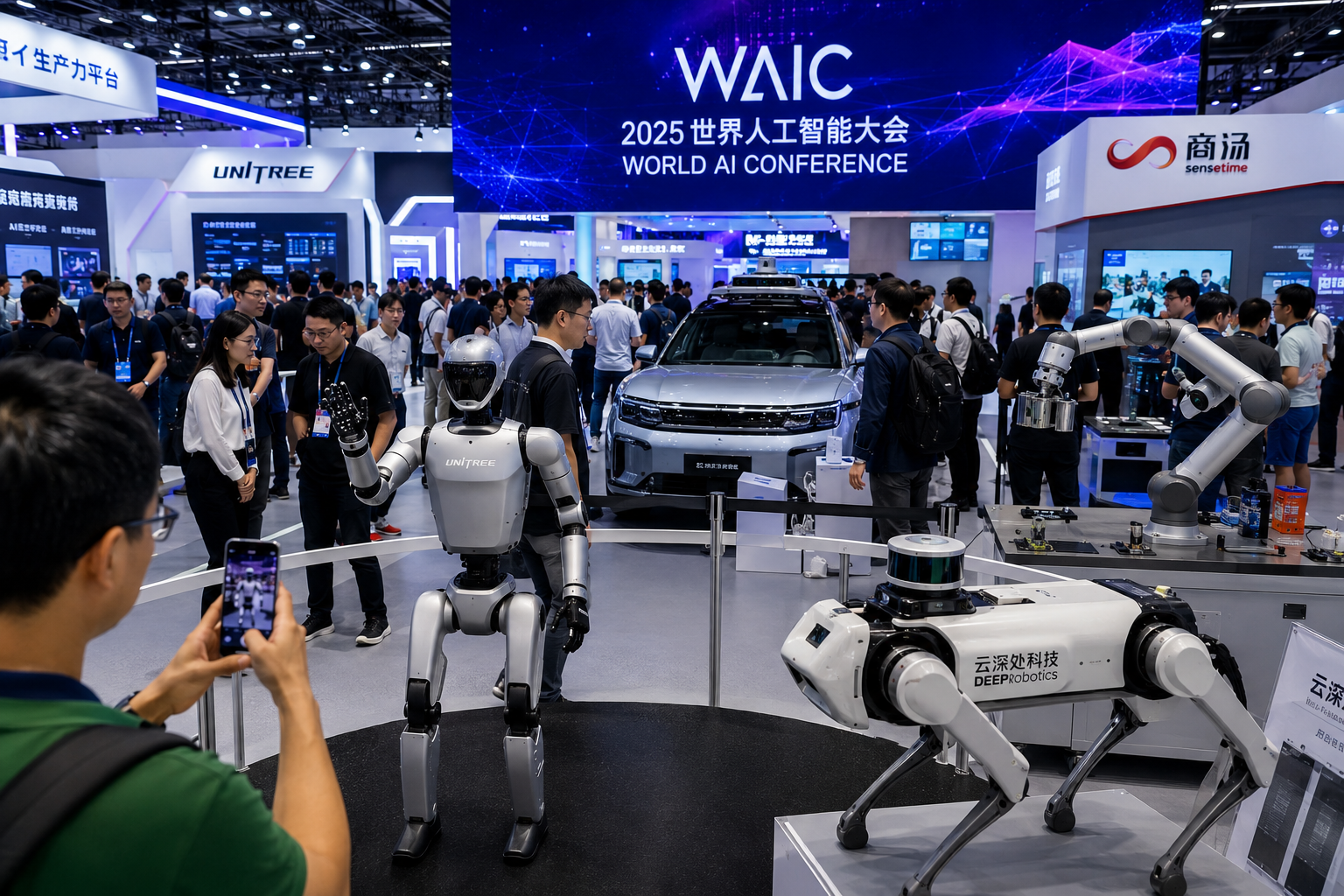
Unitree’s path looks different. The Hangzhou based company, which became the world’s top-selling humanoid robot maker last year, filed with the Shanghai Stock Exchange on March 20 to raise about 4.2 billion yuan through the STAR Market, China’s answer to Nasdaq. Estimates of the resulting valuation range from roughly $6.2 billion to $7 billion. CITIC Securities is lead underwriter. Unlike most of its US rivals, Unitree is reportedly profitable, a detail that changes how public investors will model the stock: less “growth story,” more “can this scale margin the way a hardware manufacturer should.”
Two more Chinese entrants are moving through the pipeline behind Unitree. Agibot, based in Shanghai, is preparing a Hong Kong listing that people close to the deal put at a $5 billion to $6.4 billion valuation. EngineAI has confidentially filed for its own Hong Kong IPO. Between them, China is on track to have at least three separately listed humanoid robotics companies before the US has one that’s actually trading.
Where the US and Everyone Else Stands
The US bench, by contrast, is still almost entirely private. Figure AI’s roughly $39 billion valuation, backed by OpenAI, Microsoft, and Nvidia, dwarfs every figure attached to Agility or Unitree, but Figure has given no public signal on timing. Its BMW manufacturing partnership at the Spartanburg, South Carolina plant remains the strongest real world proof point behind that valuation. Boston Dynamics, whose electric Atlas has its entire 2026 production run committed to Hyundai, is only accessible to public investors through Hyundai’s stock. Tesla is building Optimus in house, with no separate listing on the table. UBTech Robotics, already trading in Hong Kong under 9880.HK, remains the closest thing to an established pure-play humanoid stock, though it predates the current wave of US and European entrants.
Company | Path to Public Markets | Status (as of July 2026) | Reported Valuation
Agility Robotics | SPAC merger, Churchill Capital Corp XI | Definitive agreement signed June 24; closing pending shareholder and SEC approval | $2.5B pre-money Unitree Robotics | Direct IPO, Shanghai STAR Market | Filed March 20; application accepted | ~$6.2B–$7B Agibot | Direct IPO, Hong Kong | Reportedly in preparation | ~$5B–$6.4B EngineAI | Direct IPO, Hong Kong | Confidentially filed | Undisclosed Figure AI | Undetermined | No IPO date set | ~$39B (private round) UBTech Robotics | Already public (9880.HK) | Trading | Market cap varies daily
Why the Supply Chain Is Moving First
Public markets are already pricing this shift, just not through the robotics makers themselves yet. Ouster, the lidar and perception-hardware company that closed its acquisition of Stereolabs earlier this year, has climbed roughly 150% year to date as investors position around what CEO Angus Pacala has called the sensing layer for “physical AI.” The company’s first-quarter revenue hit $48.6 million, up 49% year over year, with guidance for the second quarter jumping to a range of $1.15 billion to $1.25 billion. Vishay Precision Group, a Pennsylvania maker of strain gauges most investors have never heard of, is drawing similar attention: strain gauges are the component that lets a humanoid robot’s joints sense force and torque, and demand scales directly with how many robots actually ship. When the picks-and-shovels suppliers move before the marquee names go public, it’s usually a sign the market believes the buildout is real, not just the branding.
The Bottom Line
Agility’s listing will be the first genuine market test of whether humanoid robotics has moved past demo-stage hype, but it’s a limited test. A SPAC merger doesn’t carry the same scrutiny as a traditional IPO roadshow, and the headline $300 million order book rests on one undisclosed customer meeting contractual milestones that haven’t happened yet. Unitree’s STAR Market filing is arguably the more revealing data point, because it’s the first time a leading humanoid maker has had to open its books to a regulator with real profitability already on the record, rather than a growth narrative alone. The next twelve months will separate companies with paying customers running robots on factory floors from companies with valuations built mostly on who’s willing to write the check. Watch order fulfillment and uptime numbers after each listing closes, not the day one pop.


Leave a Reply