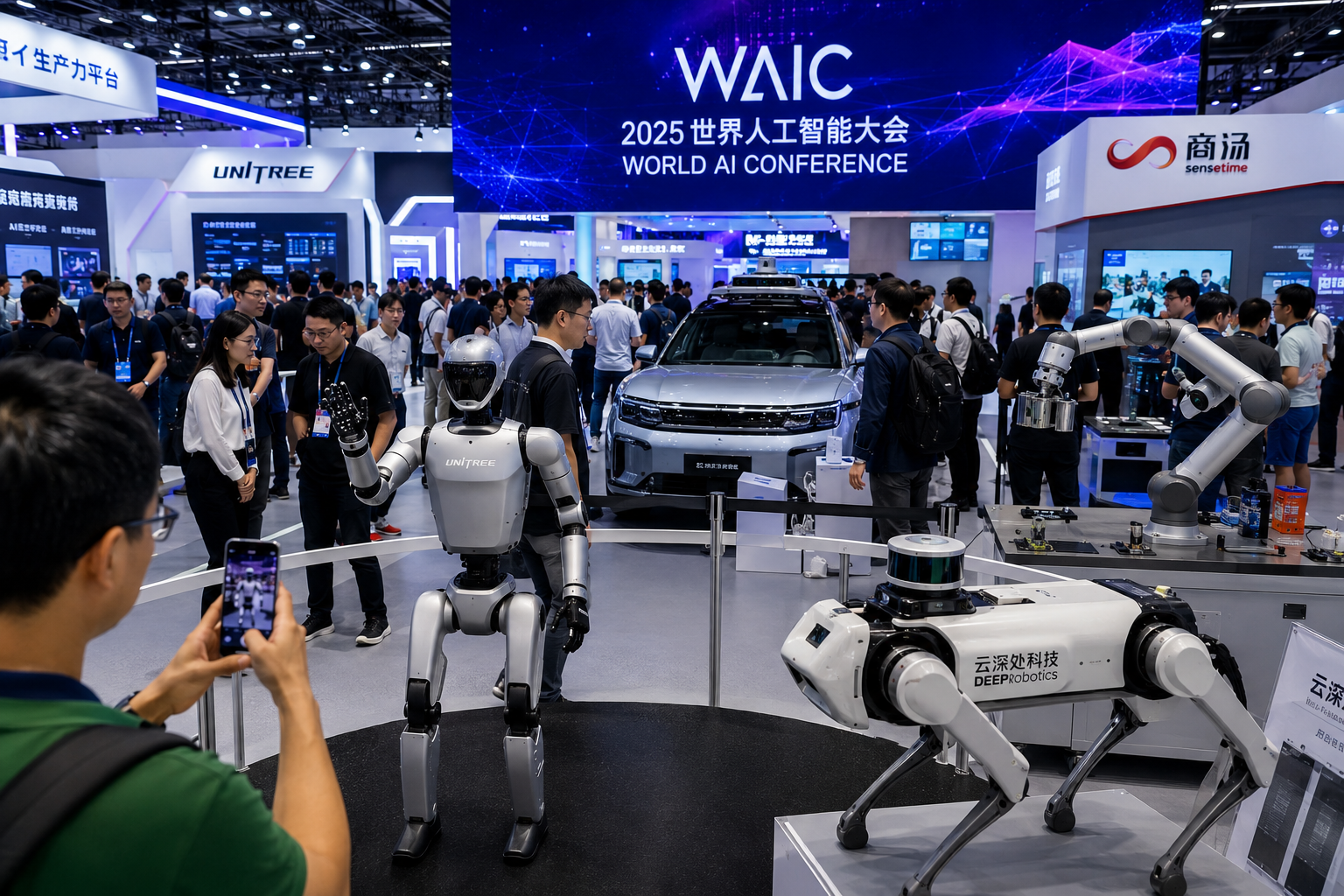
Moonshot AI unveiled Kimi K3 on Friday, describing it as the world’s largest open weight AI model. The launch coincided with the opening of China’s World AI Conference (WAIC) in Shanghai, where domestic AI companies are using the event to showcase the latest advances in large language models. Full model weights are scheduled for release on July 27. Early benchmark results shared by Moonshot put K3’s performance close to Anthropic’s frontier tier Fable model, a comparison the company appears to be making deliberately.
A Model Built to Reclaim Market Position
The release matters for Moonshot’s trajectory as much as the industry’s. Founded in 2023 by Tsinghua graduate Yang Zhilin, Moonshot built early momentum with Kimi’s long context chatbot before DeepSeek’s R1 release in January 2025 upended the Chinese AI market. Kimi fell from third to seventh place in monthly active users almost overnight. The company’s response was a pivot to open weight releases, starting with Kimi K2 last July, and K3 is the clearest sign yet that the strategy is working: Moonshot has raised roughly $1.5 billion across multiple rounds, with its valuation climbing from $2.5 billion to $4.3 billion, and is reportedly now seeking a new round at $5 billion. A release this size, timed to the industry’s biggest domestic stage, is as much a pitch to investors as it is a product announcement.
What K3 Delivers
Moonshot built K3 as a 2.8 trillion parameter mixture of experts system aimed at software engineering, deep research, and agent style tool use rather than general chat. It natively supports visual understanding and can process up to 1 million tokens of context in a single pass, a spec squarely aimed at long horizon coding and multi-step agent workloads. A Moonshot representative described the reasoning behind the scale up in blunt terms: larger parameter counts raise the ceiling on what the model can do, the same way more neural connections raise capability in a brain.
The WAIC Stage and the Timing Behind It
Releasing a day ahead of WAIC isn’t incidental. The conference has drawn more than 1,100 companies and over 300 product debuts this year, and Chinese labs have used the event before to make coordinated statements about where the domestic AI industry stands. MiniMax, SenseTime, and iFlytek are all showing updated models at the same conference. K3 also lands about a month after Anthropic’s Fable and Mythos models were briefly pulled from availability in June under U.S. export controls before access was restored on July 1 a gap Moonshot’s framing doesn’t ignore, even if the models are back online now.
A Crowded Field With a Rising Ceiling
K3 isn’t the first trillion parameter release out of China this year, but it moves the ceiling. Meituan’s LongCat 2.0 and DeepSeek’s V4 Pro had been the largest domestic models at 1.6 trillion parameters before this week. Hong Kong-listed MiniMax is reportedly working on its own 2.7 trillion parameter model, expected as soon as the third quarter, along with a separate frontier multimodal system called H3. In a market with this many well funded labs releasing near frontier weights for free, the largest model in the room has a short shelf life.
The Bottom Line
Kimi K3’s parameter count is the headline, but the more durable story is what a release this size does for Moonshot’s standing after eighteen difficult months. A model that performs near frontier level, ships with full weights, and costs nothing to license is also a recruiting pitch, an investor pitch, and a market-share pitch rolled into one release. Whether K3 holds up outside Moonshot’s own benchmarks won’t be clear until independent evals land after the July 27 weight release parameter counts have been overstated before, and “approaching” a frontier model is not the same as matching one across the board. What’s harder to dispute is the pace: this is the fourth Chinese lab to cross the trillion-parameter threshold in roughly a year, and the gap between announcement and public weights keeps shrinking.






Leave a Reply