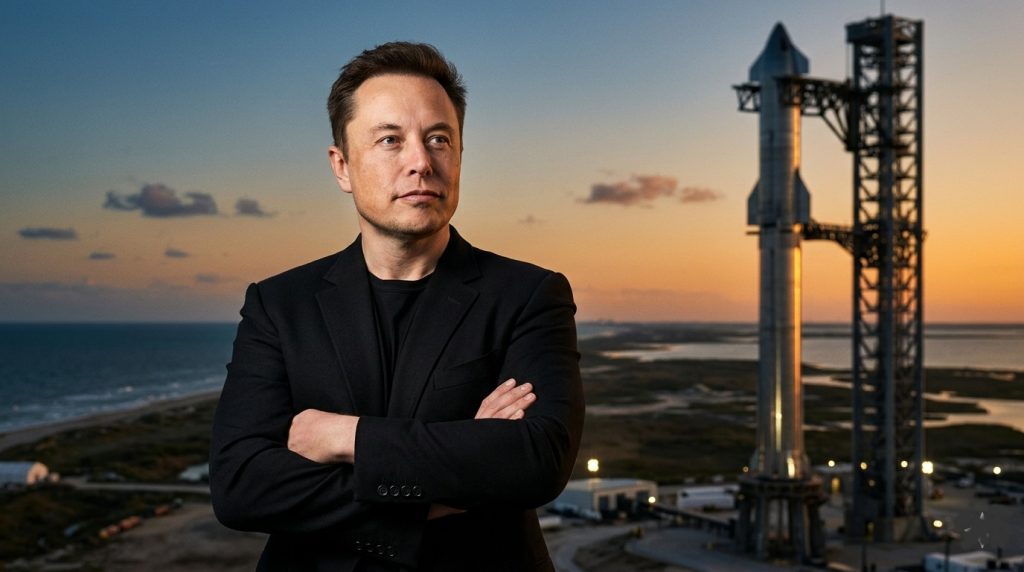
SpaceX IPO first day results 2026 are in and they are the kind of numbers that make Wall Street stop and stare.
On Friday June 12, 2026, Elon Musk’s rocket company did something no company in history had ever done. It raised $75 billion in a single day on the Nasdaq. Not $29 billion like Saudi Aramco in 2019 the previous record holder. Seventy-five billion dollars. And by the time the closing bell rang, SpaceX was worth more than $2 trillion and Elon Musk had become the world’s first trillionaire.
This was not just the biggest IPO ever. It was the moment the space industry and the AI industry officially merged in the eyes of global investors and the implications for every major AI company planning to go public in 2026 are enormous.
SpaceX IPO First Day Results
SpaceX shares gained 19% on their first day of trading to close at $160.95. The stock opened at $150 already an 11% jump from the IPO price of $135 and at one point surged over 30%, briefly giving SpaceX a market value of more than $2.25 trillion.
Trading volume exceeded 500 million shares on the day making it one of the most actively traded IPOs in market history. SpaceX was chasing Facebook, which saw roughly 580 million shares change hands on its first day in 2012.
After markets closed the stock continued climbing, reaching $166.76 in after-hours trading up another 3.5% from the closing price pushing SpaceX’s market cap close to $2.2 trillion.
To put $2.1 trillion in context: SpaceX is now worth more than every major US bank. More than Berkshire Hathaway. More than every pharmaceutical company in America. A company that builds rockets, operates internet satellites, and is quietly building AI infrastructure for the US government is now among the most valuable businesses on earth.
What Elon Musk Said From Starbase
While SpaceX executives including President Gwynne Shotwell and CFO Bret Johnsen rang the opening bell at the Nasdaq in New York, Musk was in Starbase, Texas, behind a Nasdaq-branded podium. He addressed investors and employees as trading began: “Whoever you are watching this, SpaceX wants to be able to take you to the moon, take you to Mars, and ultimately beyond. I gave SpaceX less than a 10% chance of succeeding at all, to be clear.”
A man who gave his own company a 10% chance of surviving is now worth over a trillion dollars because it did more than survive it became the most valuable IPO in human history.
Why Investors Priced SpaceX This High
The question serious investors were asking on Friday was not whether SpaceX would pop on day one. The question was what they were actually buying.
Wedbush analyst Dan Ives framed it directly in a note to investors Friday morning: “SpaceX going public is an important moment for the broader tech sector as this AI Revolution and data takes this next step forward.”
That framing is the key to understanding the valuation. Investors were not just buying a rocket company. They were buying the infrastructure layer underneath the AI economy.
SpaceX’s Starlink satellite network now covers most of the planet with broadband internet. Every AI application that needs connectivity in remote locations, at sea, or in conflict zones runs on Starlink. The US military uses it. Ukraine used it. Airlines use it. The AI companies racing to deploy agents and autonomous systems everywhere on earth need exactly what SpaceX provides.
The IPO marked a new era not just for its size, but also its scope SpaceX is the first of what are expected to be several major AI related IPOs in the coming months. (Build Fast with AI) Anthropic is next. OpenAI is filing. The $75 billion SpaceX raised on Friday sets the benchmark every other AI-adjacent company will be measured against for the rest of 2026.
What the Retail Investor Question Tells You
One of the most watched aspects of Friday’s debut was whether the unusually large retail allocation would create chaos.
There had been concern on Wall Street that SpaceX’s announced retail allocation of up to 30% was going to result in much wilder price swings. That concern turned out to be wrong trading was not especially volatile and positive momentum continued after markets closed.
The fact that a 30% retail allocation did not destabilize SpaceX’s debut tells you something important about who was buying. This was not purely speculative retail money chasing hype. Institutional investors the pension funds, sovereign wealth funds, and asset managers who hold positions for years wanted SpaceX badly enough that their demand absorbed the retail selling pressure without flinching.
Perpetual futures for the IPO had been priced around $162 on the Hyperliquid platform earlier in the week, and Friday’s closing price landed close to that number. (Snowflake) The market had priced this correctly before it even opened. That is what happens when institutional demand is overwhelming.
What It Means for Anthropic and OpenAI
Every executive at Anthropic and OpenAI watched Friday’s close with extreme interest and they should.
SpaceX’s $2 trillion valuation validates the core argument both AI companies are making to their own prospective investors: that infrastructure for the AI economy deserves a premium multiple. SpaceX owns the connectivity infrastructure. Anthropic owns the reasoning infrastructure. OpenAI owns the consumer interface. All three are making versions of the same argument that the AI economy needs them the same way the internet economy needed Amazon, Google, and Microsoft.
Friday’s numbers suggest investors are willing to price that argument generously. Anthropic is filing at a $965 billion valuation with a $47 billion revenue run rate. OpenAI is targeting a similar range. Both companies will now point to SpaceX’s debut as proof that the market is open and willing to pay for AI infrastructure at scale.
The risk is also real. SpaceX’s debut was clean partly because the company’s business model is straightforward rockets fly, Starlink subscribers pay monthly, revenue is visible and recurring. Anthropic and OpenAI are burning cash to build models that may or may not generate the revenue their valuations require. The comparison flatters them in some ways and exposes them in others.
The Historical Context
The largest IPO in history raised $75 billion for SpaceX more than doubling Saudi Aramco’s previous record of $29 billion set in 2019.
To understand how extraordinary that number is, consider the comparison. Saudi Aramco is the world’s most profitable company. It pumps oil from the ground with decades of infrastructure already built, minimal capital expenditure required, and guaranteed demand. Its $29 billion IPO was considered shocking at the time.
SpaceX builds rockets one of the most expensive and dangerous manufacturing processes on earth and its CEO openly admits he gave the company less than a 10% chance of surviving. It raised more than double what Aramco raised. In a single day.
The market is not just betting on SpaceX. It is betting that the companies building the infrastructure of the next fifty years of human civilization are worth pricing accordingly and that the era of cheap, easy capital for anything less than transformational technology is over.
FAQ
What was SpaceX’s closing price on its first day of trading?
SpaceX closed at $160.95 on June 12, 2026 up 19% from its IPO price of $135 per share. In after-hours trading the stock reached $166.76.
How much did SpaceX raise in its IPO?
SpaceX raised $75 billion in its initial public offering the largest IPO in history, more than doubling Saudi Aramco’s previous record of $29 billion set in 2019.
What is SpaceX’s market cap after its IPO?
SpaceX closed its first day with a market cap above $2.1 trillion, briefly touching $2.25 trillion during intraday trading and approaching $2.2 trillion in after-hours trading.
Did Elon Musk become a trillionaire from the SpaceX IPO?
Yes. The SpaceX IPO made Elon Musk the world’s first trillionaire based on his combined holdings across SpaceX, Tesla, and his other ventures.
What ticker does SpaceX trade under?
SpaceX trades on the Nasdaq under the ticker symbol SPCX.
What does SpaceX’s IPO mean for Anthropic and OpenAI?
SpaceX’s $2 trillion debut validates the market’s appetite for AI infrastructure at premium valuations, setting a benchmark that both Anthropic and OpenAI will reference when making their own IPO cases to investors later in 2026.
Related Reading
• SpaceX IPO 2026: Everything You Need to Know Before the Biggest Listing in History
• The AI IPO Race 2026: SpaceX, Anthropic and OpenAI Are All Going Public at the Same Time
• Anthropic IPO 2026: The Shocking Truth Behind Claude AI’s Nearly $1 Trillion Valuation
• Amazon flipped the switch on Anthropic and Silicon Valley was caught off guard.
 Claude Fable 5 Moved Behind Paywall Today
  DeepSeek Raised $7.4 Billion and the Investors Got Absolutely Nothing to Show for It
  Google Lost a Nobel Prize Winner to Anthropic and That Is Only Half the Problem
  Regular Investors Outbid Wall Street on SpaceX and Some of Them Already Regret It
  SoftBank’s Masayoshi Son Says Robots Are the Next Trillion Dollar Bet and He Just Put Real Money Behind It
  SpaceX Bought The AI Coding Tool You Use For 60 Billion Dollars
  What Is AGI Artificial General Intelligence in 2026 and Are We Already Living With It?
  The Tokenmaxxing Trap: Reasons AI Budget Startups Are Failing in 2026