Apple rarely redesigns its entry-level Macs without a bigger plan in mind. Reports suggest the company is working on a refreshed 14-inch MacBook Pro for 2027, but the story goes beyond a new laptop. It offers an early glimpse into how Apple may reshape its Mac lineup as AI-powered computing, custom chips, and new form factors become central to the future of personal computers.
Apple hardware rumors tend to follow a pattern. A leak surfaces months, sometimes years, before launch. Analysts pick it apart. And more often than not, the leak turns out to be an early signal of something the company has been building toward for a while. This one, sourced from Bloomberg’s Mark Gurman, fits that pattern closely, and it’s worth understanding why.
What the New MacBook Report Says
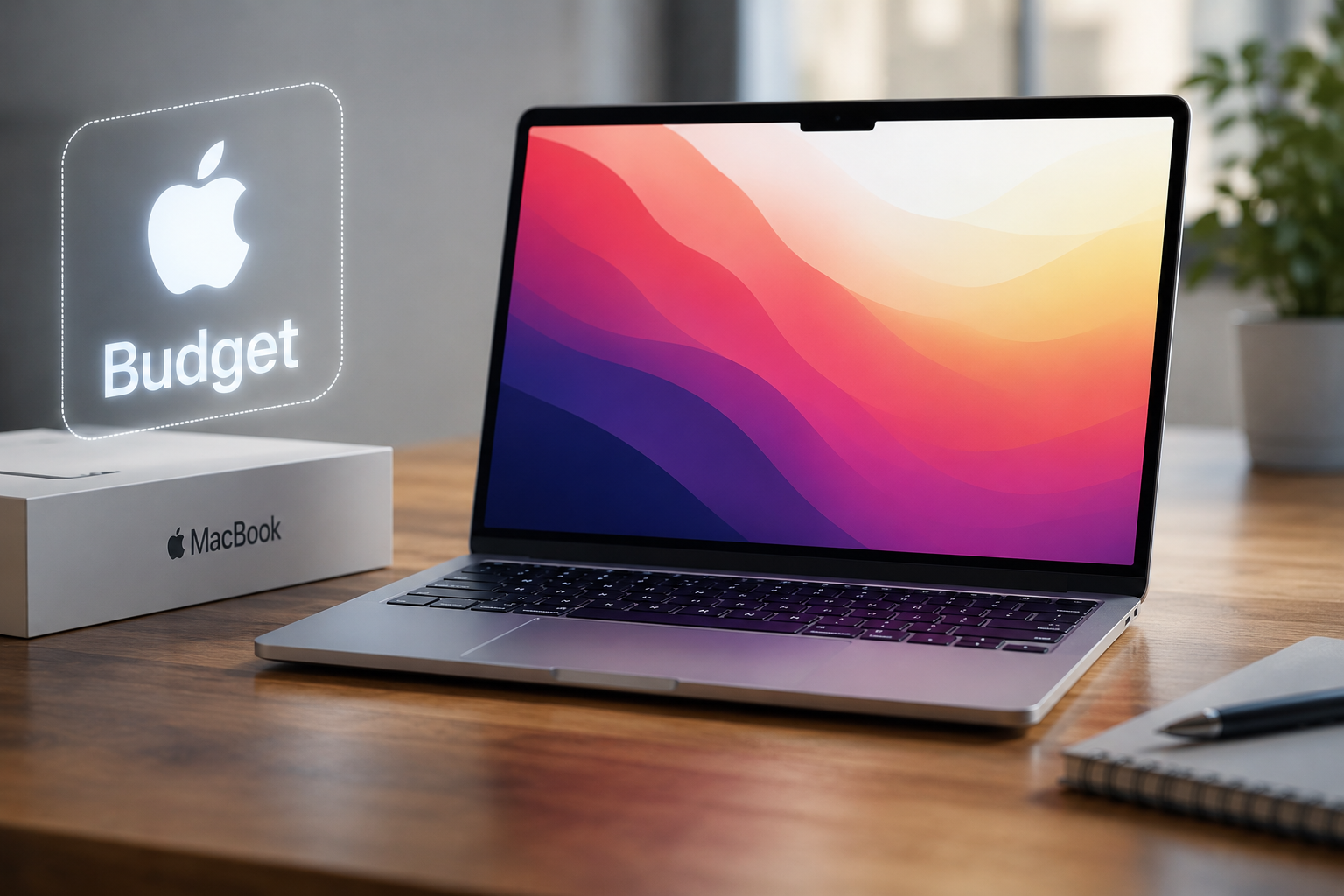
According to Gurman’s reporting, Apple is preparing a redesigned entry-level 14-inch MacBook Pro, internally codenamed K104, for release in the first half of 2027. The laptop will reportedly adopt styling closer to Apple’s higher-end Pro models, closing a visual gap that’s existed for years between the base model and its pricier siblings.
Expected Launch Window
The redesign is targeted for spring or early summer 2027. That’s notable because Apple has increasingly used spring as a launch season for budget and entry-level products, rather than saving everything for its traditional fall event. Earlier in 2026, the company used a similar spring window to introduce the MacBook Neo alongside new iPads and an iPhone.
14-Inch Display and a Redesigned Chassis
The screen size itself isn’t changing. What is changing, reportedly, is the chassis around it. The current entry-level MacBook Pro has used the same basic enclosure since the M1 generation launched in late 2021. A five-year design cycle is unusually long by Apple’s standards, and it’s part of why this report has generated so much attention.
How Reliable the Report Appears
Gurman’s Apple predictions have a strong track record, and multiple outlets, including TechCrunch and Engadget, have independently corroborated the core details. Still, everything here comes from supply chain sourcing, not an Apple announcement. Timelines shift. Features get cut. Treat this as a strong signal, not a confirmed spec sheet.
Why Apple Might Be Redesigning Its Entry-Level MacBook
A five year-old chassis on the cheapest Pro model isn’t an accident. It’s usually a sign that a company is waiting for the right moment to make a bigger structural change, rather than iterating in small steps.
A More Unified Mac Lineup
Apple’s higher-end MacBook Pro models have received more visual attention over recent years than the entry level version. Bringing the base model’s design in line with the rest of the lineup would make the whole Pro family feel more cohesive, rather than having the cheapest model look noticeably dated next to its siblings.
Better Thermal Design
A new chassis often means new cooling architecture. Apple has already tested improved vapor chamber cooling for upcoming iPad Pro models, and a similar approach in the MacBook Pro would help sustain performance under heavier workloads, particularly relevant as on-device AI tasks become more demanding on the chip.
More Efficient Apple Silicon
The redesign lines up closely with Apple’s chip roadmap. Reports suggest Apple is skipping the Pro and Max variants of its upcoming M6 chip entirely, funneling resources instead into an accelerated M7, built on a 2-nanometer process with a reported memory bandwidth around 240 GB/s. That’s a meaningful jump, and it points toward a chip built with a specific priority in mind.
Preparing for AI-First Computing
That priority appears to be AI. A 2-nanometer process and significantly higher memory bandwidth aren’t just performance bragging rights. They’re the kind of specs that matter most for running AI models directly on the device, rather than sending every request to the cloud.
How It Could Fit Into Apple’s Future Mac Strategy
Right now, Apple’s Mac lineup follows a fairly simple structure: MacBook Air for everyday use, entry-level MacBook Pro for prosumers, and premium MacBook Pro configurations for professionals who need maximum power.
A Possible Fourth Tier
Gurman’s reporting hints at something more layered. With the entry level Pro getting its own redesign and touch capable higher end MacBooks expected between late 2026 and early 2027, Apple appears to be pulling the entry level and premium Pro experiences further apart, potentially opening space for a distinct “Ultra” tier down the line aimed squarely at power users.
Why Simplification Still Matters
Even with more tiers, Apple tends to keep the buying decision simple: pick your size, pick your power level, done. A cleaner visual distinction between entry level and premium Pro models would actually make that decision easier for shoppers who currently struggle to tell the difference between a base and a maxed-out MacBook Pro at a glance.
AI Could Become the Biggest Upgrade
The most interesting part of this report isn’t the chassis. It’s what the chip strategy behind it suggests about where Apple thinks value now comes from.
On-Device AI as the Real Upgrade
Apple Intelligence has so far leaned on a mix of on-device and cloud processing. A chip built around higher memory bandwidth and a smaller manufacturing process shifts more of that workload onto the device itself, which typically means faster responses and fewer round trips to a server.
Local Machine Learning and Battery Efficiency
Running AI tasks locally isn’t just about speed. It also affects battery life, since cloud requests consume power through the network radio as well as the processor. A more efficient chip architecture, paired with local machine learning capability, could let Apple market the next MacBook Pro on stamina and responsiveness rather than raw benchmark numbers.
A Shift in What “Upgrade” Means
For years, Apple sold new Macs primarily on speed. This report suggests the next real differentiator might be how intelligently the laptop handles everyday tasks, from summarizing documents to editing photos, without needing an internet connection to do it.
What Buyers Should Expect
None of this is available yet, and the practical advice depends heavily on what someone actually needs right now.
Should People Wait?
If a current MacBook Pro still handles daily tasks comfortably, waiting makes sense. Buying right before a design refresh often means missing out on updated ports, displays, or chip improvements that typically accompany a chassis change.
Who Might Benefit From Buying Now
Anyone who needs a reliable laptop immediately shouldn’t put life on hold for a report based on supply chain leaks. Current models still offer strong performance, and Apple’s existing lineup isn’t going anywhere overnight.
Should Current Owners Upgrade?
Owners of recent M3 or M4 MacBook Pro models likely won’t see enough of a jump to justify switching immediately. Anyone still running an Intel-based Mac or an early M1 model, on the other hand, is already due for an upgrade regardless of what happens in 2027.
Looking Ahead
It’s worth repeating that everything here comes from early reporting, not an Apple confirmation. Component shortages, particularly in memory chips, have already pushed prices higher across Apple’s lineup this year, and that same pressure could delay the 2027 timeline. Apple has changed course on hardware plans before, sometimes quite late in development.
Final Thoughts
Apple’s next budget MacBook may ultimately be remembered not for its design, but for marking the moment the Mac began evolving into an AI-first computer. If the reports prove accurate, this redesign could be the first step in a much broader transformation of Apple’s laptop lineup.
FAQS
Is Apple launching a new budget MacBook?
Reports point to a redesigned entry-level 14-inch MacBook Pro, codenamed K104, arriving in the first half of 2027. Apple hasn’t confirmed this officially.
When could the redesigned MacBook be released?
Bloomberg’s Mark Gurman places the launch in the first half of 2027, likely during Apple’s spring release window.
Will it include Apple Intelligence features?
The reported chip upgrade, built on a 2-nanometer process with higher memory bandwidth, appears designed specifically to improve on-device AI performance, which would strengthen Apple Intelligence features.
Will Apple keep selling the current MacBook models?
An interim 14-inch MacBook Pro with an M6 chip and the current design is expected in late 2026, ahead of the full redesign in 2027, so current-style models aren’t disappearing immediately.
Should you wait for the new MacBook?
If your current laptop still meets your needs, waiting is reasonable. If you need a new machine now, current models remain capable and won’t become obsolete once the redesign arrives.





Leave a Reply