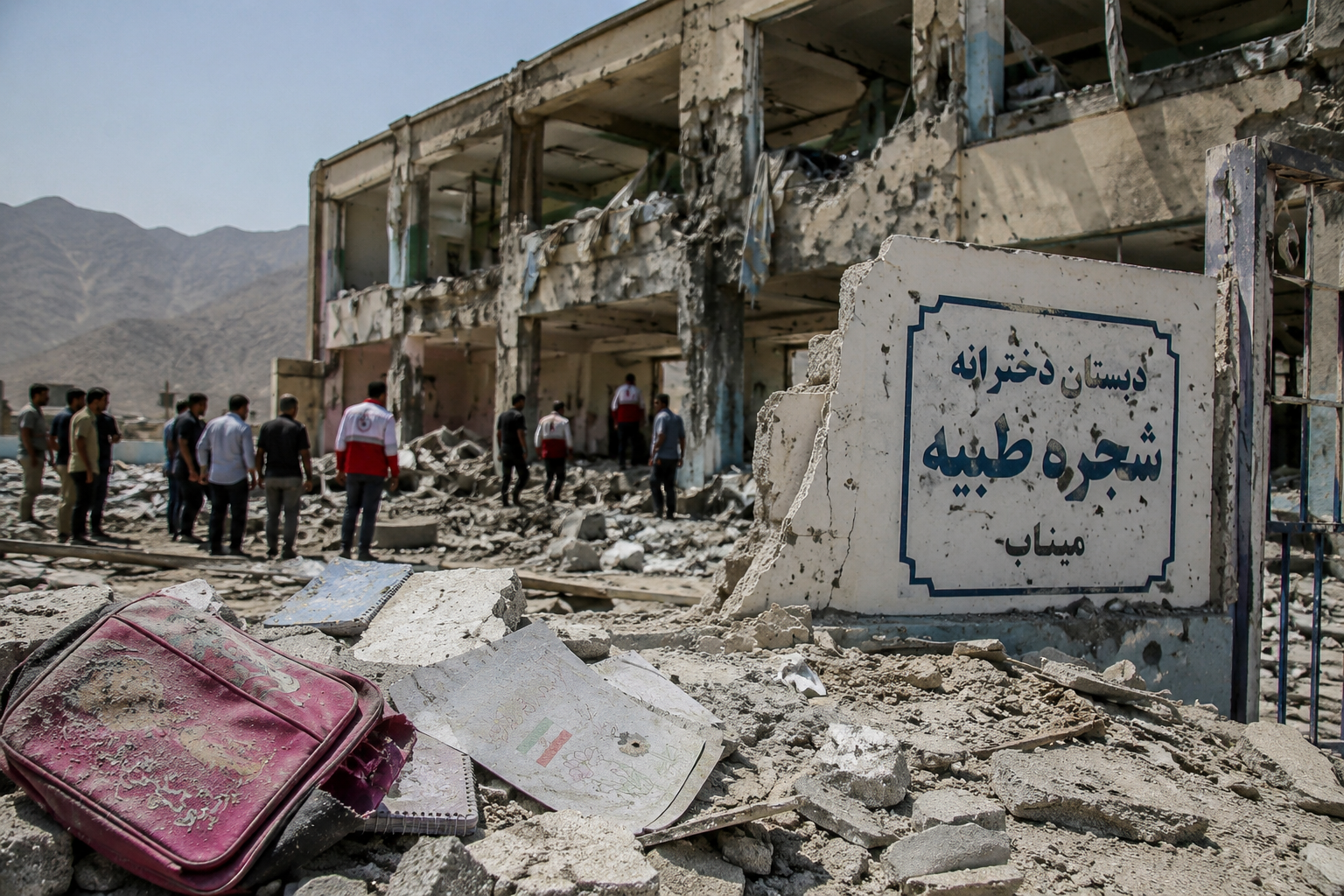
On February 28, 2026, the first day of U.S. and Israeli military operations against Iran, a missile strike destroyed the Shajareh Tayyebeh Elementary School in Minab, in Iran’s Hormozgan province. Amnesty International and Iranian officials say at least 120 schoolchildren were among roughly 150 to 156 people killed, making it the deadliest single strike of the war’s opening days. In the months since, investigative reporting from the Washington Post, Reuters, and the Associated Press has traced the strike back to an AI-assisted Pentagon targeting system that incorporates Anthropic’s Claude model, raising a question that has since become central to a broader industry reckoning over AI safety commitments: what happens when a company can’t fully account for how its own technology was used in a lethal military operation.
What Happened in Minab
The school sat within roughly 100 yards of a long-standing Islamic Revolutionary Guard Corps naval installation, according to satellite imagery analysis by Amnesty International, though the school itself had been established and operating for years, maintaining an active social media presence and its own website, per a Reuters investigation. Witness accounts gathered by Middle East Eye describe a first strike followed by a second, and according to Minab’s mayor and Iran’s Ministry of Education, a third strikes that reportedly continued to hit the school as staff attempted to move surviving students to shelter and parents arrived to collect their children. U.S. officials denied intentionally targeting civilians and opened an internal investigation, but stopped short of publicly claiming responsibility in the weeks immediately following the strike.
By March, that position had shifted somewhat. Defense Secretary Pete Hegseth promised what the Washington Post described as a “thorough probe,” language the paper characterized as a tacit acknowledgment of U.S. responsibility, and three U.S. officials told Reuters the Pentagon had opened a formal 15-6 investigation, the administrative process that can lead to disciplinary action. A separate United Nations investigation began March 17 and remains ongoing. As of early July, more than 120 days after the strike, the Pentagon had not issued a public conclusion.
The AI System Connected to the Strike
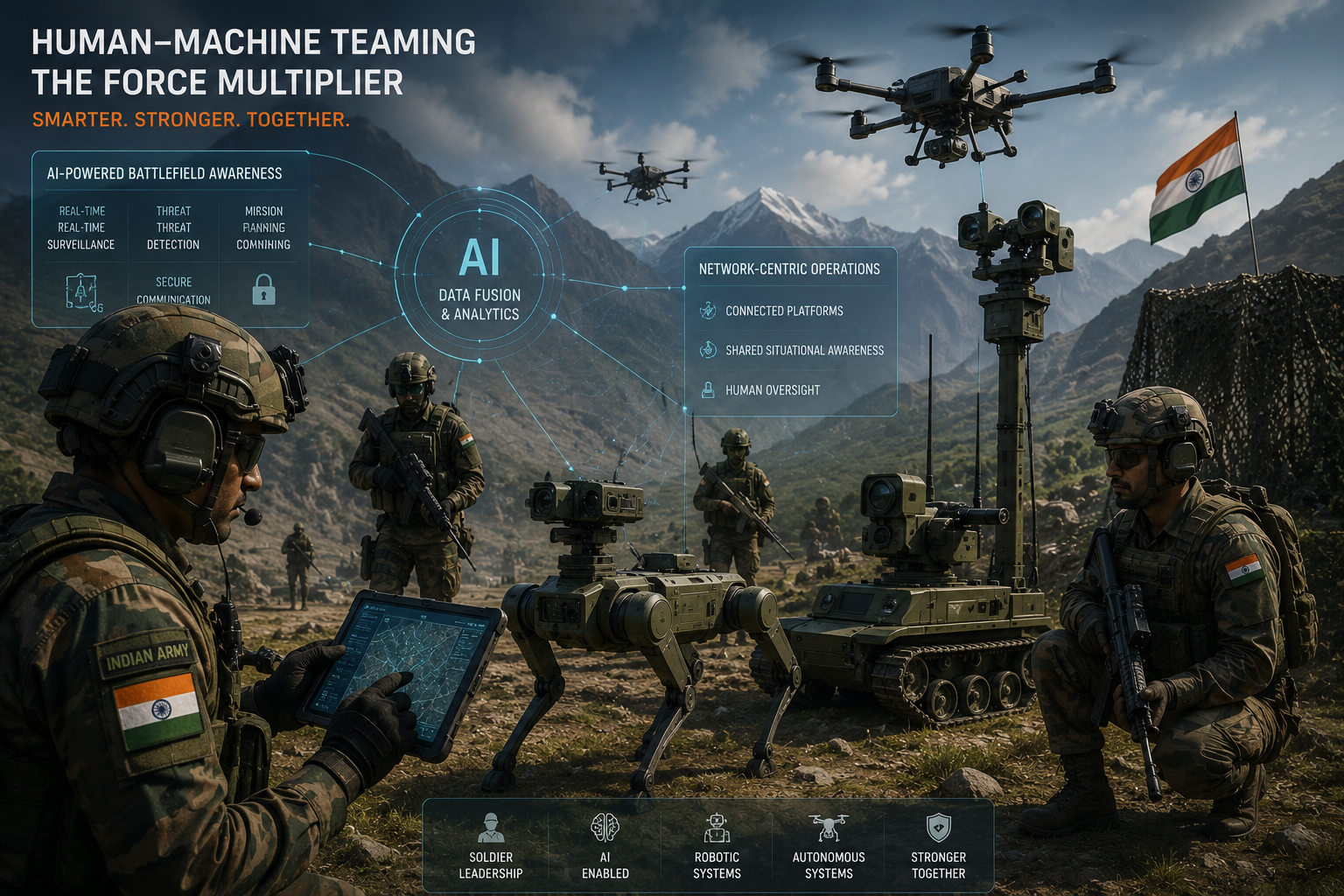
The targeting infrastructure behind the strike is U.S. Central Command’s Maven Smart System, an AI-assisted platform built by Palantir under a $1.3 billion Pentagon contract. According to Washington Post reporting, the system incorporates Claude and other AI tools to help generate strike coordinates, rank targets by strategic importance, and pair weapons to targets, and it reportedly helped CENTCOM generate hundreds of strike coordinates within the first 24 hours of the Iran campaign alone, contributing to more than 1,000 targets struck in that same window. CENTCOM’s own figures, cited in later reporting, put the total at roughly 13,000 targets identified over five weeks a volume that AI safety researchers have pointed to as raising a structural concern independent of what happened at any single site: that human review of AI-generated targets could become perfunctory simply because of the pace the system enables.
Reporting on the specific cause of the Minab strike has pointed toward stale intelligence rather than an AI malfunction. CNN reported that sources briefed on preliminary findings said CENTCOM had generated targeting coordinates using outdated Defense Intelligence Agency data that hadn’t been updated to reflect the school’s presence at that location. Ukrainian drone operators interviewed by Military Times, speaking from their own experience building semi autonomous targeting systems, said the pattern was familiar to them: not an algorithm failing at its task, but a human curated data pipeline feeding a fast moving system information that was already wrong before the AI touched it.
What Anthropic Has Said
Anthropic CEO Dario Amodei addressed the strike directly in a June interview on Bloomberg’s The Circuit, calling it “a really terrible thing to happen” while saying the company does not know exactly how its models were used in the operation. He maintained that Anthropic’s core policy, that a human makes the final decision on any strike, was upheld, but acknowledged in the same conversation that Anthropic lacks visibility into the specific ways Claude was applied within Maven. Those two positions sit in some tension: it is difficult to confirm that a principle was followed in a specific case while also saying the company doesn’t know how the underlying tool was used in that case.
The dispute has also become a legal one. A federal judge in California blocked a Pentagon effort to formally sever ties with Anthropic over a “supply chain risk” designation the company said it intended to challenge, while a separate federal appeals court in Washington denied Anthropic’s request to block that same blacklisting while litigation continues leaving the underlying contractual relationship between Anthropic and the Pentagon unresolved even as the Minab investigation proceeds in parallel.
Investigations and Accountability
Independent investigations have converged on U.S. responsibility even without an official Pentagon determination. Amnesty International, Human Rights Watch, and multiple news organizations concluded a U.S.-manufactured Tomahawk missile was likely used in the strike, and Amnesty specifically argued that given the school’s known, years-long presence at the site, the U.S. “could and should” have identified the building before targeting the area a claim the organization says constitutes a violation of international humanitarian law regardless of whether the strike hit the school directly or landed in the adjacent IRGC compound. The Iranian government held a mass funeral for the children on March 3, attended by thousands of mourners, and UN human rights investigators formally opened their inquiry two weeks later. None of these findings by themselves establish what role, if any, Claude specifically played in generating the coordinates used that day; they establish that the broader targeting system incorporating Claude was operating in the same campaign, at the same tempo, that produced the strike.
Why This Complicates the AI Safety Debate
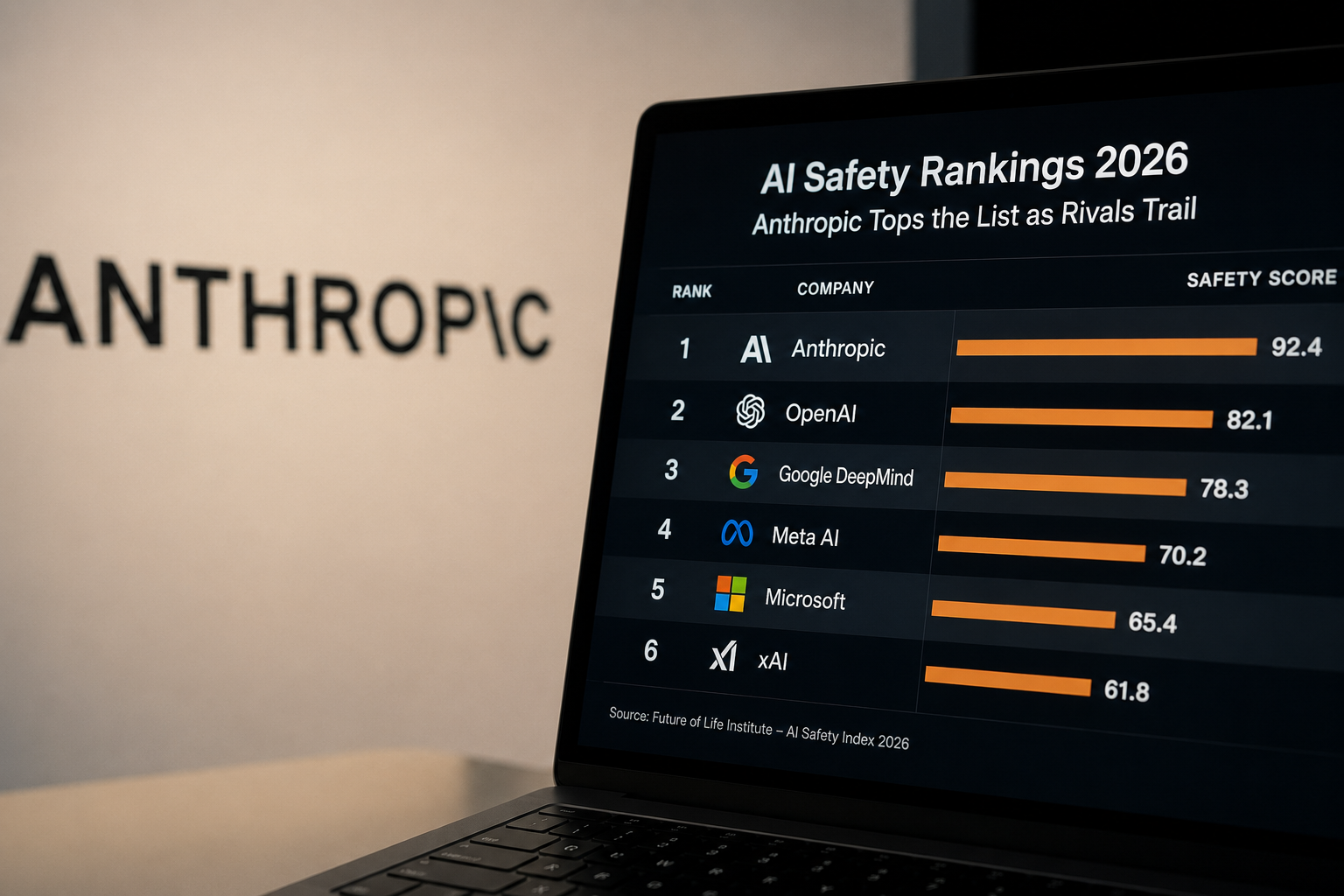
This story landed the same week the Future of Life Institute published its Summer 2026 AI Safety Index, which found that Anthropic, OpenAI, Google DeepMind, and Meta have all weakened or eliminated earlier commitments to pause development if their systems approached specified danger thresholds, and specifically linked that weakening to an industry wide shift toward defense contracts as labs reverse prior bans on military applications. Hamza Chaudhry, a researcher at the same institute, has pointed to the exact dynamic visible in Minab: an AI accelerated targeting process can generate so many targets so quickly that the human sign-off built in as a safeguard risks becoming a formality rather than genuine deliberation. Anthropic’s position, that a human retains final decision authority, is the same category of safeguard the company has publicly built its policies around. The Minab strike doesn’t disprove that safeguard in some clean, mechanical sense, but it does illustrate the limits of a company assuring the public that a principle was followed in an operation it also says it cannot fully trace.
The Bottom Line
What makes the Minab strike more than a single tragic, unresolved incident is what it reveals about the gap between a company’s stated policy and its actual operational visibility. Anthropic’s rule that a human must make the final call is a real commitment, but a commitment a company cannot verify was followed, because it cannot see how its own model was used inside a partner’s system, is a weaker safeguard than its framing suggests. That gap is precisely what the Future of Life Institute’s latest safety index was measuring when it found major labs walking back pause commitments as defense contracts became a larger part of their business. The dead in Minab are not a data point in that debate. But the debate exists, in its current urgent form, because of what happened to them.


Leave a Reply