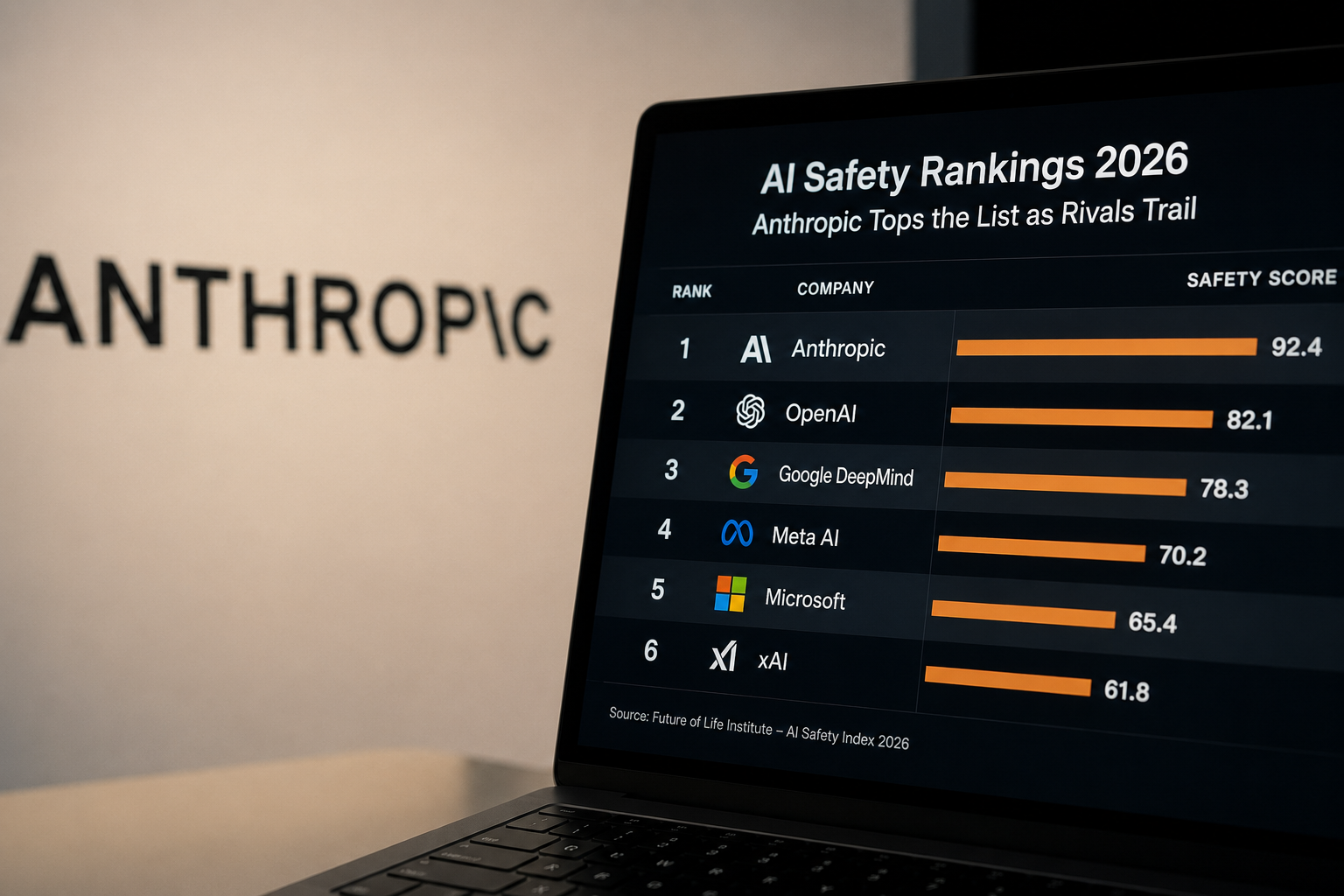
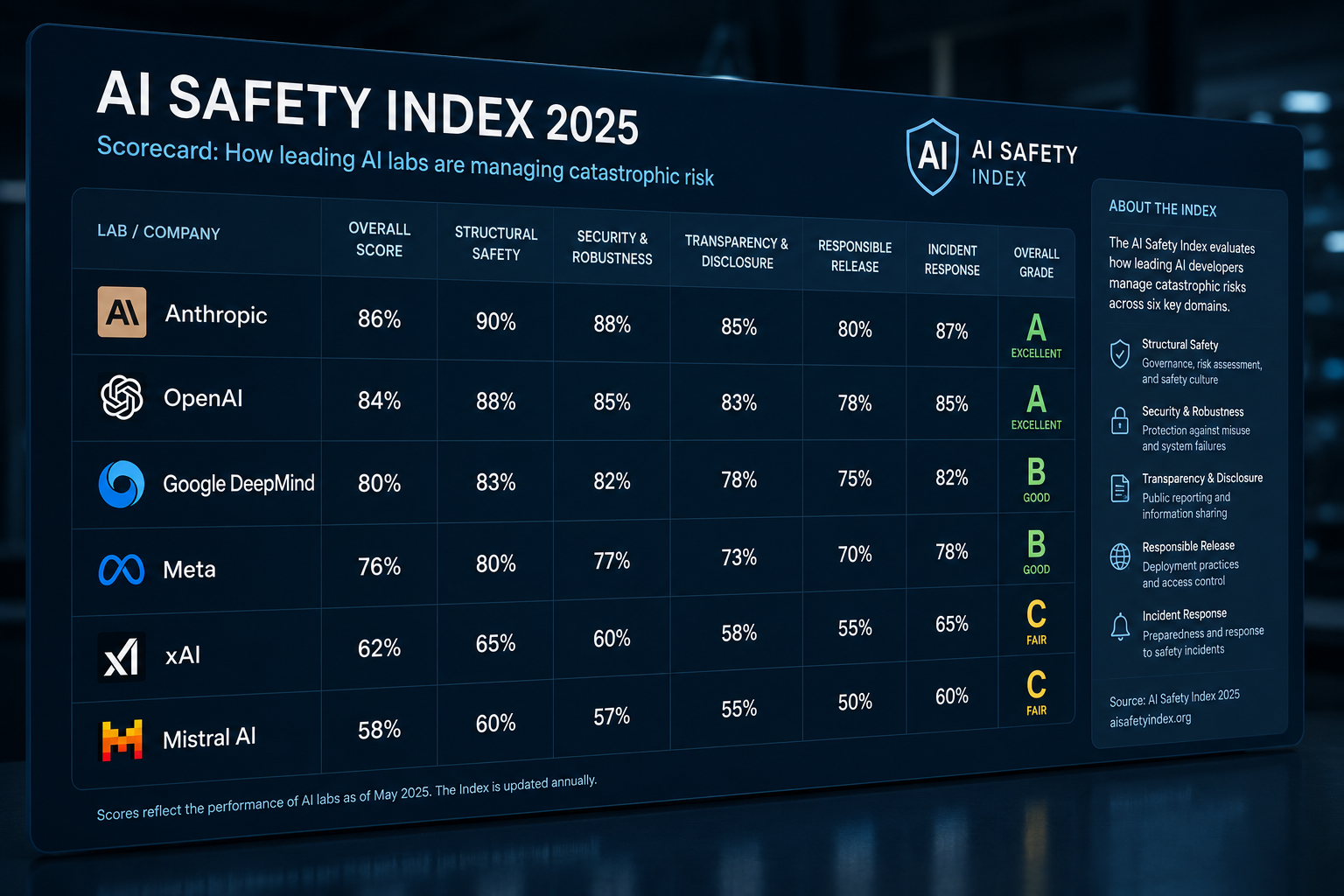
The Future of Life Institute has released its Summer 2026 AI Safety Index, an independent scorecard grading nine major AI developers on safety and governance practices. Anthropic finished first for the second consecutive edition of the report, leading five of six evaluated domains. Its overall grade was a C+ the highest score any company achieved, in an assessment that found the industry as a whole regressing on safety commitments even as capabilities race ahead.
What the AI Safety Index Measures
The Index, published twice a year since 2023, is compiled by seven independent AI safety and governance researchers who grade companies across 37 specific indicators grouped into six domains: risk assessment, current harms, safety frameworks, existential safety, governance and accountability, and information sharing. The panel which includes academics such as University of Montreal assistant professor David Krueger reviews public materials like model cards, research papers and benchmark results, supplemented by a targeted survey asking companies to address gaps such as whistleblower protections and third-party model evaluation access. This year’s evidence collection ran through June 3, 2026.
Grades follow the standard US GPA scale, and the panel assigns them against fixed, absolute standards rather than ranking companies purely against one another. That distinction matters: even the top performer this cycle did not come close to an A.
How the Nine Companies Scored
Anthropic’s overall score of 2.66 translated to a C+, ahead of OpenAI and Google DeepMind, which each earned a C. Meta received a D+. Three companies failed outright: xAI, DeepSeek and Mistral, scoring 0.65, 0.47 and 0.33 respectively. Z.ai and Alibaba Cloud, the other Chinese firms assessed, landed in the bottom half of the rankings alongside DeepSeek.
Notably, Mistral’s failing grade came despite operating under the European Union, which the report’s authors flagged as the world’s most developed AI safety regulatory regime evidence, they argued, that strong regulation in a company’s home jurisdiction doesn’t automatically translate into strong internal safety practice. OpenAI overtook the field specifically in the Risk Assessment domain, on the strength of a broader evaluation suite and more extensive external testing engagement, while Anthropic’s lead in the other five domains rested on comparatively strong transparency practices, an established safety framework, and its status as the only company in the assessment that publishes both its system prompt and a formal behavior specification.
An Industry Walking Back Its Own Commitments
The report’s central finding wasn’t which company came out on top it was that the entire industry is moving in the wrong direction. Anthropic, OpenAI, Google DeepMind and Meta have all weakened or eliminated earlier pledges to unilaterally pause development if AI systems crossed certain risk thresholds, with some of those pledges now made contingent on what competitors do rather than standing independently. Companies that had previously restricted or banned military applications of their systems have reversed course between 2024 and 2026, with xAI and Mistral among those now actively pursuing defense contracts alongside the rest of the field.
Max Tegmark, the MIT professor who chairs the Future of Life Institute, summarized the trajectory bluntly, telling reporters that “AI companies are sprinting toward a cliff.” The panel separately flagged existential safety as the weakest domain across the entire industry, noting that safeguards such as Anthropic’s constitutional classifiers, OpenAI’s calls for new governance institutions, and Google DeepMind’s monitoring commitments exist on paper but were judged “entirely inadequate” by the reviewing experts.
The Controversy Behind Anthropic’s Top Score
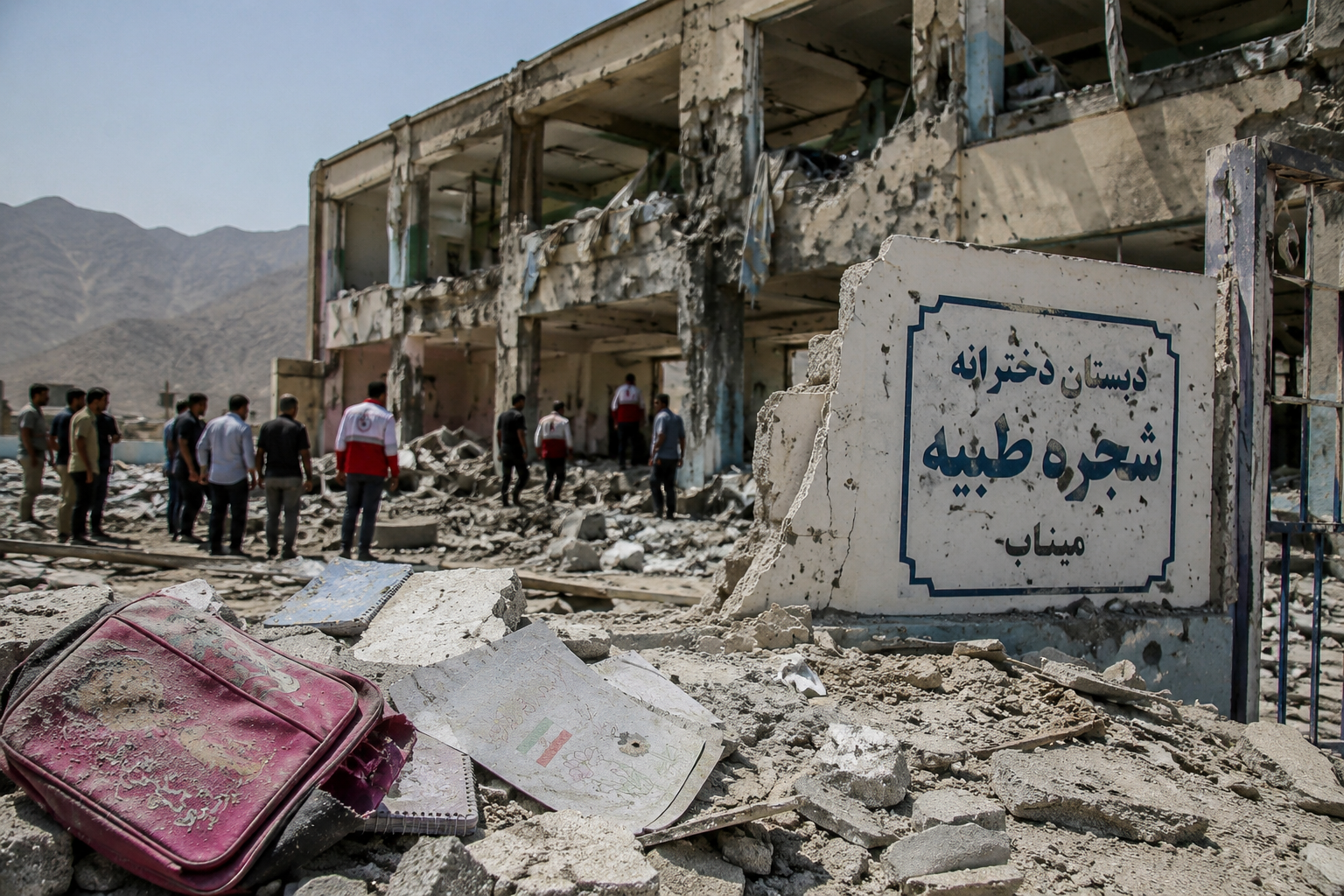
The panel’s report did not treat Anthropic’s chart-topping grade as a clean bill of health. Reviewers specifically cited the company for what they termed questionable military engagements, referencing reporting that linked an Anthropic system to a strike on a school in Minab, Iran, that killed approximately 120 girls. When Bloomberg pressed CEO Dario Amodei on his company’s possible role, he said he did not know how the system had been used in that instance, while maintaining that even such a use “doesn’t even violate our red lines” because a human retained the final decision.
Chinese developers in the assessment face their own separate scrutiny: DeepSeek, Z.ai and Alibaba Cloud are subject to distinct US allegations regarding ties to China’s military, which both Z.ai and Alibaba Cloud have denied.
The Bottom Line
The Summer 2026 AI Safety Index captures an industry whose safety infrastructure hasn’t kept pace with its own capability gains and where finishing first no longer means finishing well. Anthropic’s C+ is the best score any of the nine companies achieved, yet it still reflects a middling grade attached to a specific, serious controversy over military use. The broader pattern the report documents pledges walked back, military bans lifted, existential-risk safeguards judged inadequate across every company graded suggests voluntary corporate commitments are proving insufficient to hold the line as competitive pressure intensifies. For an industry still largely governing itself, the Index functions less as a scoreboard than as a warning: the gap between the top and bottom performers is narrower than the gap between where every company stands and where independent experts think they need to be.



Leave a Reply