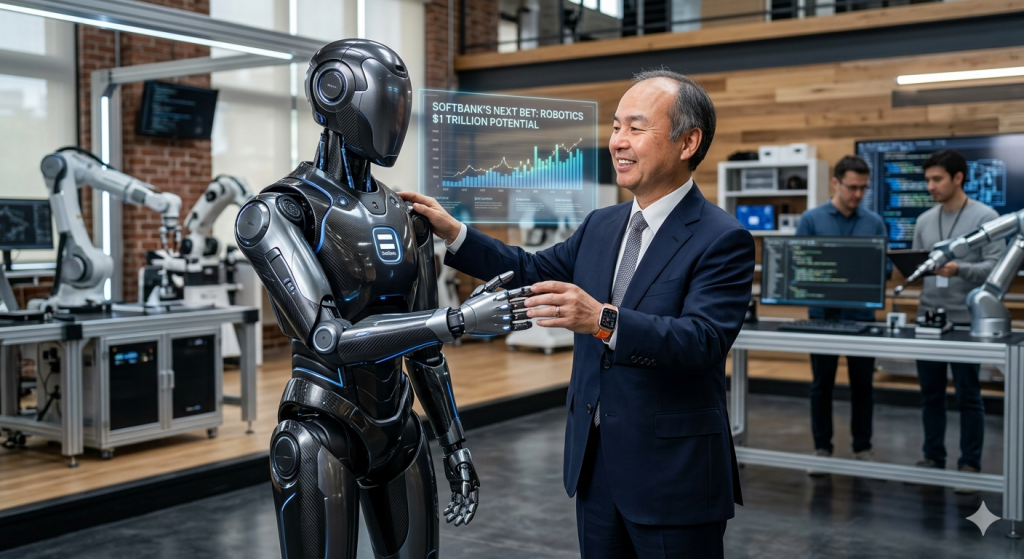
Masayoshi Son robotics trillion dollar bet 2026 is not a passing comment from a tech executive doing the media rounds. It is the latest chapter in a thirty year pattern of one man identifying the next era of technology before almost anyone else does and then betting everything on it.
You may not know the name, but you know what he built. Masayoshi Son backed Alibaba before most of the world had heard of it and turned a $20 million investment into one of the greatest returns in venture capital history. He also lost billions on WeWork in a bet that became a cautionary tale taught in business schools. He is the kind of investor who swings enormous and is sometimes spectacularly right and sometimes spectacularly wrong. So when he makes a sweeping public statement about where the next trillion dollar company is coming from, the entire tech and finance world stops to listen even the people who think he is wrong.
This time, he is talking about robots.
What Masayoshi Son Actually Said
Son sat down with CNBC’s Arjun Kharpal in Paris on June 1, the day after SoftBank announced a 75 billion euro investment in AI infrastructure in France. Asked what excited him most, Son said “both” humanoid and industrial robotics, “with physical AI as a core.”
Physical AI refers to the integration of artificial intelligence into machines that interact with the real world robots that don’t just process information but actually move, manipulate objects, and operate in physical space.
This was not an offhand remark buried in a longer interview. Son had just made his most sweeping statement yet about where the AI revolution is heading, declaring that the AI revolution is “more than 10x, probably 50x bigger than dot com” and calling it “the biggest revolution of technology and realization that mankind ever experienced.”
For context on how big a claim that is the dot com boom created Amazon, Google, and the entire modern internet economy. Son is saying AI, with robotics as a core pillar, will dwarf that by fifty times.
The Money Behind the Words
Talk is common in tech. What makes Son’s statement different is the capital already committed behind it.
In October, SoftBank purchased the robotics division of Swiss engineering firm ABB in a $5.4 billion deal specifically to explore what Son calls the company’s “next frontier” physical AI.
SoftBank is also planning a $100 billion IPO this year for its new AI robotics venture, Roze AI, which aims to improve the efficiency of AI infrastructure buildout, including the use of autonomous robotics in data center construction. SoftBank has tapped Goldman Sachs, JPMorgan, Mizuho, and Morgan Stanley to lead that IPO.
A $5.4 billion acquisition. A $100 billion IPO in the works. This is not a CEO musing about the future on television this is a company that has already restructured around the bet he is describing.
SoftBank has also hinted it could borrow against its OpenAI shares to help finance Stargate data centers, robotics, and broader AI expansion. Son is willing to leverage one of his most valuable holdings a stake in OpenAI to fund the robotics bet. That is conviction backed by collateral, not just confidence backed by words.
Why SoftBank’s Position Carries Extra Weight
SoftBank has deployed capital across the entire technology stack, with landmark investments in Alibaba, OpenAI, and ARM transforming the Japanese multinational into an AI platform that has helped it overtake Toyota to become Japan’s most valuable company.
Overtaking Toyota matters here in a way that is almost poetic. Toyota represents Japan’s old industrial might cars, manufacturing, physical engineering excellence built over seventy years. SoftBank overtaking it as Japan’s most valuable company, driven by AI infrastructure and platform bets, signals a changing of the guard in what kind of company creates the most value in the 2026 economy.
SoftBank recently acquired ABB’s robotics division and is planning the $100 billion IPO for Roze AI, signaling strong commitment to this sector’s growth. Son denied any AI bubble concerns and views market corrections as buying opportunities.
Son Is Not Alone and the Timing Connects to Bigger Moves
Son’s enthusiasm for robotics connects directly to Nvidia’s announcement the same week that it had chosen China’s Unitree Robotics as the hardware partner for its first humanoid robot reference design. Son and Nvidia CEO Jensen Huang appear to be reading the same roadmap.
That is a significant detail. Two of the most influential figures in the entire AI ecosystem one running the world’s most valuable chip company, the other running one of the most aggressive AI investment platforms on earth are independently arriving at the same conclusion about where the next wave of value creation happens.
Wedbush’s Dan Ives told CNBC he sees the humanoid robotics market being worth trillions of dollars in the next ten years. Market watchers also noted that China is currently far outpacing the United States in the development of the technology.
That last point deserves its own attention. Goldman Sachs sees the humanoid robotics market reaching $38 billion by 2035, while Morgan Stanley projects a far more aggressive $5 trillion by 2050.
The gap between those two estimates $38 billion versus $5 trillion tells you how genuinely uncertain even the most sophisticated financial institutions are about how big this gets. Son is betting on the high end of that range.
The Skeptic’s Case
Not everyone agrees with Son’s framing, and his own track record gives reason for healthy skepticism alongside the excitement.
The WeWork collapse remains the cautionary tale that follows Son into every major bet he makes. He has an established pattern of identifying real, transformative trends early and then sometimes overcommitting capital to specific bets within that trend that do not pan out. Being right about robotics as a category does not guarantee that SoftBank’s specific investments ABB’s robotics division, Roze AI, the broader physical AI portfolio will be the ones that capture the value.
Son’s June 1 remarks land in the middle of a live debate about whether AI enthusiasm has pushed markets too far. Plenty of serious analysts believe current AI valuations across the board, robotics included, are running ahead of actual deployed revenue and proven business models. Son’s response to that concern is consistent and clear he does not see a bubble, and he sees corrections as buying opportunities rather than warning signs.
What This Means If You Are Watching the AI Industry Closely
For Bexorn readers tracking where AI investment is heading next, Son’s statement is a signal worth taking seriously even with appropriate skepticism attached. The pattern across the robotics industry in 2026 supports his thesis directionally Boston Dynamics committing to 30,000 robots a year, Figure scaling production at BMW, Unitree shipping thousands of units, JAL deploying humanoids at one of the world’s busiest airports. The infrastructure for a robotics boom is being built in parallel by multiple independent companies, not just promised by one investor.
Whether the specific number is fifty times the dot-com boom, or five trillion dollars by 2050, or something more modest the direction of travel that Son, Huang, and the production numbers from Boston Dynamics and Figure are all pointing toward the same conclusion. Physical AI is moving from research lab to factory floor faster than most people outside the industry have noticed.
FAQ
What did Masayoshi Son say about robotics?
SoftBank CEO Masayoshi Son told CNBC on June 1, 2026 that he sees humanoid and industrial robotics, with physical AI as a core component, as the next trillion-dollar business opportunity.
How much has SoftBank invested in robotics?
SoftBank acquired ABB’s robotics division for $5.4 billion in October and is planning a $100 billion IPO for its AI-robotics venture, Roze AI, with Goldman Sachs, JPMorgan, Mizuho, and Morgan Stanley leading the listing.
How big could the humanoid robotics market become?
Estimates vary widely. Goldman Sachs projects the market reaching $38 billion by 2035, while Morgan Stanley projects a far more aggressive $5 trillion by 2050.
Is Masayoshi Son worried about an AI bubble?
No. Son has publicly dismissed AI bubble concerns and described market corrections as buying opportunities rather than warning signs.
What is physical AI?
Physical AI refers to artificial intelligence integrated into machines that interact with the real world robots that move, manipulate objects, and operate in physical environments rather than purely digital ones.
Related Reading
• Boston Dynamics Atlas Locked In 30000 Robots A Year And Your Factory Is Next
• Japan Airlines Put Humanoid Robots To Work At Haneda Airport Because There Was No One Left To Hire
• SpaceX Bought The AI Coding Tool You Use For 60 Billion Dollars
 Google Lost a Nobel Prize Winner to Anthropic and That Is Only Half the Problem
 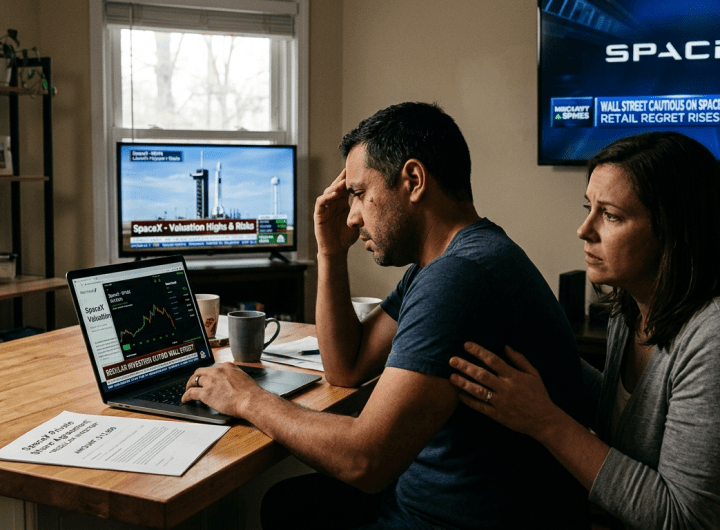 Regular Investors Outbid Wall Street on SpaceX and Some of Them Already Regret It
  SpaceX Bought The AI Coding Tool You Use For 60 Billion Dollars
 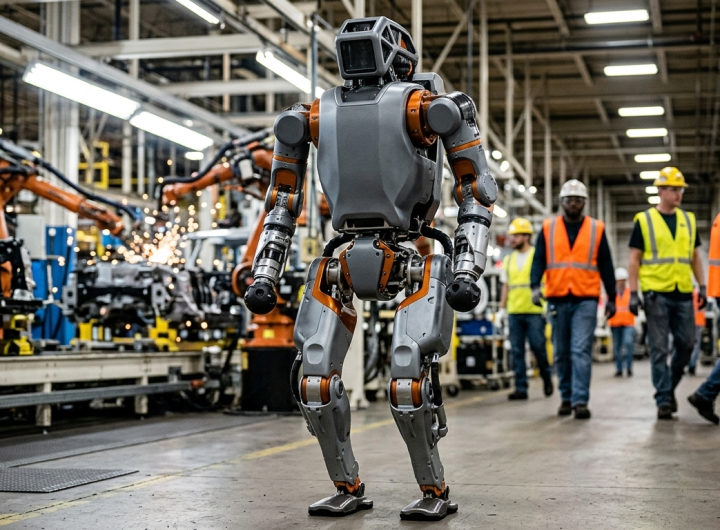 Boston Dynamics Atlas Locked In 30000 Robots A Year And Your Factory Is Next
 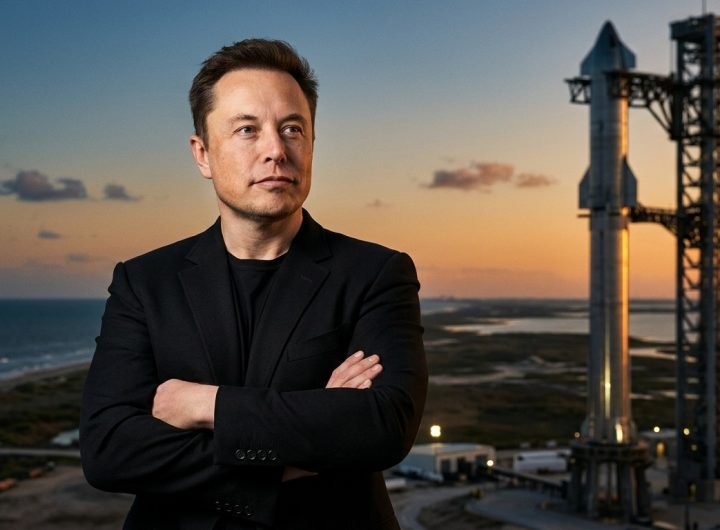 SpaceX goes public: Elon Musk hits trillionaire status after a record-breaking IPO.
  Visa Stopped $2.6 Billion in Fraud But the Criminals haven’t given up.
  The Tokenmaxxing Trap: Reasons AI Budget Startups Are Failing in 2026
  Claude vs ChatGPT for Business in 2026 New Spending Data Settles The Debate
  Best AI Tools for Founders 2026 and the Mistake Most Founders Make Buying Them