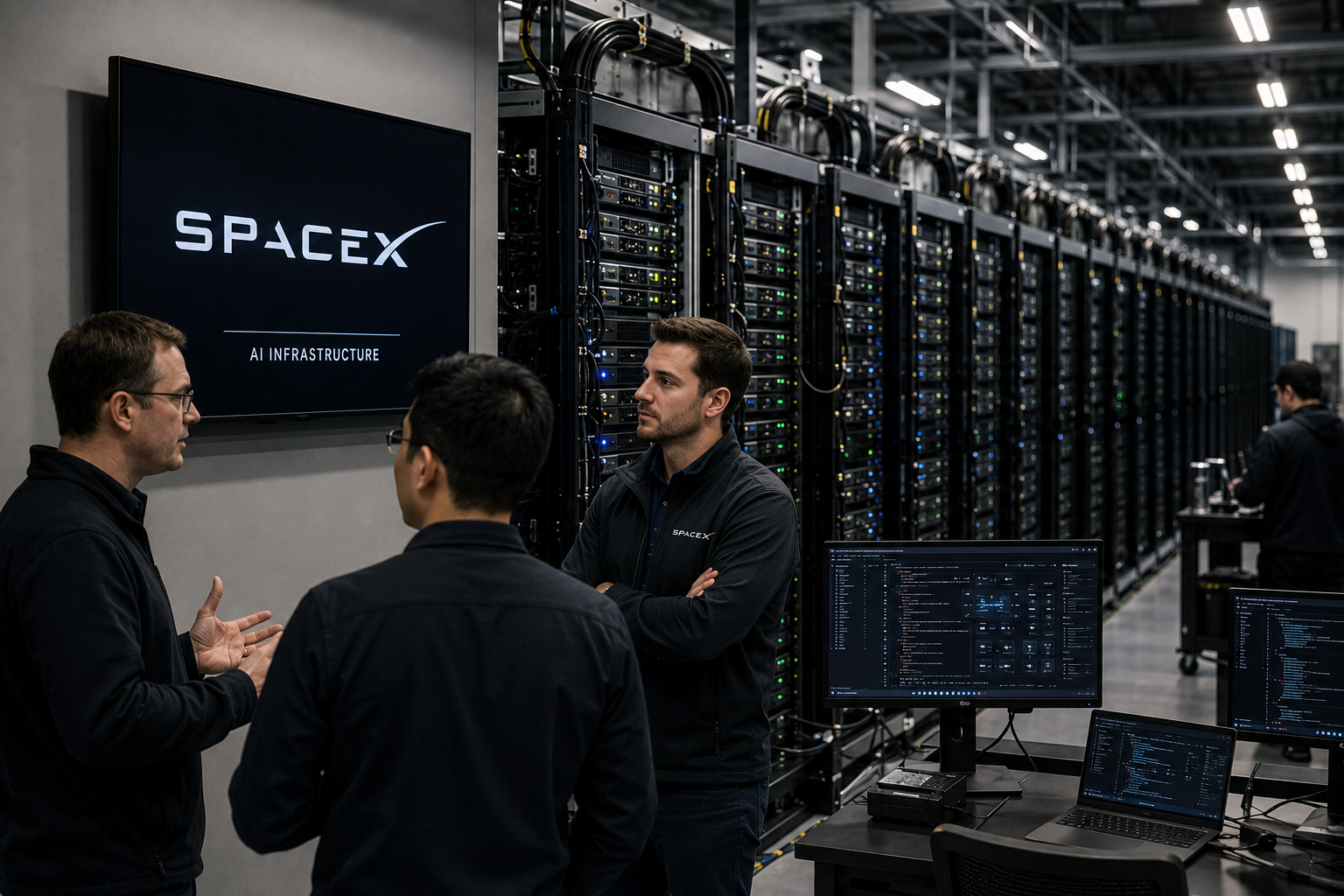
SpaceX has found a way to profit from the AI compute shortage without locking itself into long-term commitments. Contracts worth billions of dollars to lease Nvidia GPU capacity to Anthropic and Google include a 90-day clause allowing the company to reclaim the hardware if Grok’s computing needs increase.
SpaceX agreed in May to give Anthropic access to roughly 325,000 Nvidia GPUs across its Colossus data centers for $1.25 billion a month. Weeks later, it struck a similar deal to provide Google with about 110,000 GPUs for $920 million a month. Together, the agreements could generate nearly $26 billion in annual revenue, exceeding SpaceX’s reported revenue last year. Neither SpaceX, Anthropic nor Google disclosed additional financial terms beyond the reported agreements.
The flexibility built into those deals cuts both ways. SpaceX can lease its capacity out, redirect it to train future versions of Grok, or shift it to Starlink’s internal workloads. Sridhar Tayur, a professor of operations management at Carnegie Mellon University, called that a blessing and a curse: the 90 day cancellation clause lets SpaceX pull hardware back the moment Grok needs it, but it equally lets Anthropic or Google walk away if cheaper compute becomes available elsewhere. Whether the leasing business becomes a durable part of SpaceX’s operations or stays a temporary arrangement, Tayur said, depends on which side ends up using that exit option first.
The clause also gives SpaceX flexibility as xAI expands Grok and future AI systems that require larger computing clusters.
Demand for AI compute continues to run ahead of supply, and new data centers take years to build. That shortage is what lets SpaceX charge a premium for capacity Anthropic and Google need immediately, according to Sean Cray, a senior analyst covering telecom, media and technology at Moody’s. It also explains why competitors are pursuing similar arrangements: Meta is reportedly negotiating a deal to lease its own computing power to Anthropic worth as much as $10 billion over two years, according to Reuters and the New York Times.
For now, the contracts highlight a shift in the AI infrastructure market. Computing power has become valuable enough that providers are selling excess capacity while keeping contractual options to reclaim it if strategic priorities change.




Leave a Reply