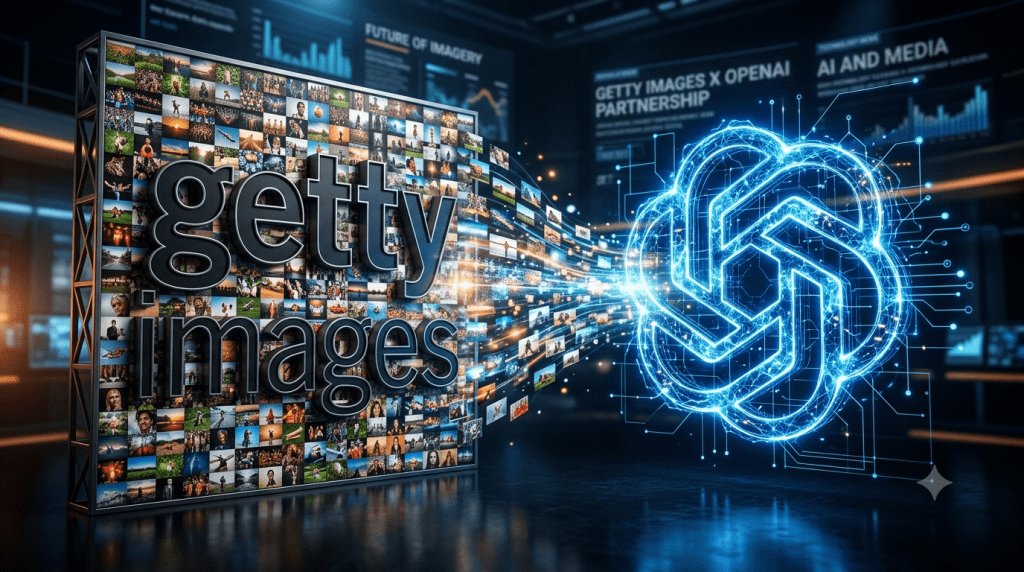
Four years ago Getty Images looked at what AI was doing to the photography industry and decided to fight back hard. It banned AI generated art from its entire platform. It launched a lawsuit. It told the world that what these AI companies were doing amounted to theft taking the work of hundreds of thousands of photographers and using it without permission, without credit, and without pay.
Then on June 21 2026 it signed a multi-year deal with OpenAI.
The Getty Images OpenAI deal 2026 is one of the most dramatic reversals you will see from any company in this AI era. And the story of how Getty got from “we are suing you” to “let’s be partners” tells you something important about what is actually happening right now to every business that creates visual content for a living and what it means for the photographers and creators whose work sits inside Getty’s archive.
Who Is Getty Images
If you have ever seen a news article with a professional photograph underneath it, there is a reasonable chance that photo came from Getty Images.
Getty is the world’s largest stock photography agency. It has been around since 1995 and has spent three decades building a library of hundreds of millions of images everything from celebrity red carpet photos to war journalism to wildlife photography to product shots for advertising campaigns. It works with nearly 600,000 contributors worldwide and provides coverage of more than 160,000 news, sports, and entertainment events annually.
The way it works is simple. A photographer takes a photo. They license it to Getty. Getty then licenses it to newspapers, magazines, advertisers, and websites who need professional images. Everyone gets paid a cut. The system has worked for thirty years.
Then AI image generation arrived and started threatening the entire foundation that system was built on.
Why Getty Spent Years Fighting AI Companies
To understand why the Getty Images OpenAI deal 2026 is such a big deal you have to understand how hostile Getty was toward AI just a few years ago and why.
In September 2022 Getty made a decision that was fairly radical at the time. It completely banned AI generated artwork from its platform. Not restricted, not monitored banned outright. While competitors like Shutterstock were quietly starting to explore partnerships with AI image generators, Getty drew a hard line and said this content is not welcome here.
The reasoning was straightforward. Getty’s entire business model rests on the value of real licensed photography. If anyone can generate a photorealistic image of a professional athlete or a news event in seconds using an AI tool, who is going to pay a licensing fee for a real photograph of the same thing? The threat to Getty’s core business was direct and existential.
Then in early 2023 Getty went further and sued Stability AI the company behind the image generator Stable Diffusion in the United Kingdom. Getty alleged that Stability AI had unlawfully copied and processed millions of images from Getty’s library, using them to train its AI model without permission or payment. It was one of the most high profile legal challenges any company had mounted against an AI firm, and it put Getty at the centre of a debate that the entire creative industry was having about what AI companies were allowed to do with copyrighted content.
For a while it looked like Getty was going to be the company that held the line. The one that said no, you cannot just take our work, and made it stick in court.
Then in 2025 a London court dismissed many of Getty’s claims against Stability AI. The legal strategy had not worked the way Getty hoped. And the AI image generators kept getting better, kept getting cheaper, and kept eating into the market for the kind of stock imagery that Getty’s business was built on.
What the Getty Images OpenAI Deal in 2026 Actually Is
So what exactly did Getty and OpenAI agree to and what does it mean in practice?
Getty Images has signed a multi-year agreement with OpenAI that will make its licensed visual content available through ChatGPT’s search and discovery features.
In plain language when you ask ChatGPT something that would benefit from a real photograph, like what a particular location looks like, what happened at a specific news event, or what a public figure looks like, ChatGPT will be able to show you a real licensed Getty image instead of generating a fake one or pulling something unchecked from the open web.
ChatGPT users will see Getty Owned or Getty represented images in response to queries that call for visual context historical events, celebrity portraits, travel destinations, news moments. These images will appear with proper attribution and under a licensing framework.
This is not a training deal. That is the crucial detail. OpenAI is not acquiring Getty’s images to train its generative models. The deal is specifically for display the images are shown as search results or illustrative content, not ingested for training purposes. For photographers who have spent years worried about their work being used without consent to teach AI how to replicate their style, that distinction matters enormously. Your photo showing up in a ChatGPT search result with attribution is a very different thing from your photo being absorbed into a model that then generates images that compete with yours.
The deal is structured as a revenue sharing model. Getty will receive compensation based on usage metrics likely a combination of flat licensing fees and per-impression payments. The specific financial terms have not been disclosed.
Why Getty’s Stock Jumped 145% Overnight
The market reaction to this deal was dramatic.
Getty Images stock surged as much as 145% on the news. For a company whose shares had been quietly bleeding value for over a year as investors worried about what AI would do to the stock photography business, that is a stunning single day recovery.
But there is important context to put around that number. The stock jump happened against a backdrop of a near 40% drop in Getty’s share value since the start of the year. So even after jumping 145% in a day, Getty’s stock is still well below where it was twelve months ago. The market is excited about the deal but not pretending that Getty’s structural challenges have disappeared overnight.
What the share price jump actually reflects is investor relief more than investor celebration. It says that people who had been writing off Getty as a company whose business model was being eaten alive by AI now see a path where Getty gets to participate in the AI economy rather than just be destroyed by it. Whether that path delivers long term value is a very different question. But the immediate signal from the market was clear this deal changes the story enough to matter.
What Happens to the Photographers
Here is the part of the Getty Images OpenAI deal 2026 that deserves more attention than most coverage is giving it.
Getty has 600,000 photographers and content creators whose work sits inside its archive. They license their images through Getty, and Getty pays them a cut of whatever revenue those images generate. That arrangement has worked for decades and it is the entire reason the archive is as valuable as it is.
Now Getty has signed a deal where its images will appear inside ChatGPT searches. Revenue will flow from OpenAI to Getty based on usage. But what exactly flows from Getty to the 600,000 creators whose work is generating those views?
Getty has not shared any details on whether images will be used in AI training, and its silence on the downstream economics for contributors is what Getty’s 600,000 photographers should read first about this deal.
Getty’s CEO Craig Peters framed the deal in terms of trust and quality saying that high quality licensed visual content makes AI powered search and discovery more useful and more trustworthy. That is true. But it does not answer the question of how much of the revenue from this arrangement reaches the actual humans who created the images being displayed.
When Getty signed its earlier deal with Perplexity AI, it included provisions for attribution and source links. The OpenAI deal mentions attribution and a licensing framework but the financial pass through to contributors has not been detailed publicly. That gap matters because the creators are the product. Without them there is no archive, no deal, and no 145% stock jump.
Why This Is a Bigger Story Than Just One Company Changing Its Mind
The Getty Images OpenAI deal 2026 is not just about one stock photo company deciding to partner with an AI company instead of fight it. It is a signal about where the relationship between AI and copyright is actually settling in 2026 and it is not settling where a lot of people hoped it would.
The legal route has largely not worked. Getty’s UK case against Stability AI had key claims dismissed. Getty Images separately lost significant copyright claims in US proceedings as well. Other major lawsuits from news organisations and authors against AI companies have had mixed results at best. The courts have not delivered the clear line that creators were hoping for that says you cannot train AI on our work without permission and payment.
What is replacing litigation is licensing. Company by company, content library by content library, the major holders of copyright are working out commercial deals with AI companies. Getty did it with Perplexity last year. Shutterstock reaffirmed its own partnership with OpenAI in early 2026, primarily for training data. Getty has now done it with OpenAI for display. The New York Times sued OpenAI and separately signed content deals. The Associated Press, Axel Springer, and a growing list of publishers have all chosen negotiation over litigation.
What this means for individual creators the photographers, illustrators, and journalists whose work sits inside these archives is that the decision about whether and how their content gets used by AI companies is increasingly being made by the platforms that aggregate their work, not by them. Getty decides whether Getty’s archive gets licensed to OpenAI. The 600,000 contributors find out about it when the press release drops.
That is not a new power dynamic in the stock photography world. Getty has always made licensing decisions on behalf of contributors. But the scale of what is being licensed and the ambiguity around how the economics flow back is new.
The Shutterstock Factor Why the Timing Matters
There is one more piece of context that makes the Getty Images OpenAI deal 2026 particularly interesting from a business strategy perspective.
Getty is currently awaiting regulatory approval for its proposed $3.7 billion acquisition of rival Shutterstock, a transaction that would further consolidate the stock photography and visual content market.
If that acquisition goes through, the merged entity would control an enormous share of the world’s professional licensed image archive. And if that entity has an active commercial relationship with OpenAI the company that operates the world’s most used AI platform then the combined Getty Shutterstock would be positioned as essentially the default licensed image layer for AI search globally.
That is an extraordinarily powerful position to be in if the thesis holds that AI powered search is where visual content discovery is headed. It would also give the merged company significant leverage in future licensing negotiations because there would be no comparable alternative archive for AI companies to turn to.
Whether regulators approve the Shutterstock acquisition changes the picture significantly. But the OpenAI deal is clearly being built with that larger strategic ambition in mind.
What Changed Between 2022 and 2026
It is worth just saying plainly why a company that banned AI art in 2022 and sued an AI company in 2023 is signing multi-year deals with AI companies in 2026.
The answer is not that Getty decided AI is actually fine. The answer is that Getty looked at four years of data and concluded that fighting AI through the courts was not going to save its business, and that the only viable path forward was finding a way to make its archive valuable to AI companies rather than just a target for them.
With advances in AI making it ever easier to digitally recreate the editorial and stock images that are the core of Getty’s business, the company is looking for new revenue streams in a rapidly changing landscape.
That is the honest version of why this deal exists. Not a change of principle. A change of strategy because the original strategy was not working and the business was suffering for it. The 40% share price decline before this deal was announced was a real problem. The dismissed legal claims were a setback. The continued improvement of AI image generation tools was not stopping.
So Getty made a pragmatic call. If you cannot beat them, make them pay you to use what you have that they cannot easily replicate the legally cleared, professionally shot, historically significant archive of real moments that no image generator can actually produce, only imitate.
BEXORN VERDICT: 7/10 A Smart Business Decision With Unanswered Questions
The Getty Images OpenAI deal 2026 is the right move for Getty as a business in 2026. The litigation strategy was not delivering, the share price was suffering, and the alternative continuing to fight while AI companies built around you was worse. Getting paid for display in the world’s most used AI platform is a better outcome than watching your archive become irrelevant.
But the 7 out of 10 reflects a real gap. The deal is good for Getty shareholders and arguably good for users who get real licensed images instead of hallucinated ones in their ChatGPT results. Whether it is good for the 600,000 photographers and creators who are the actual source of Getty’s value is a question that has not been answered yet. That answer when it comes will determine whether this deal is remembered as the moment the creative industry found a sustainable relationship with AI, or the moment the platforms that aggregate creative work decided they could monetise it without meaningfully sharing the upside with the people who made it.
FAQ
What is the Getty Images OpenAI deal in 2026?
Getty Images signed a multi-year display partnership with OpenAI on June 21, 2026. Under the deal, Getty’s licensed image library will appear inside ChatGPT’s search and discovery features, giving users access to real professional photographs when they ask questions that would benefit from visual context.
Is OpenAI using Getty images to train its AI models?
No at least not under the terms of this deal. The agreement is specifically for display purposes, meaning Getty images will appear in ChatGPT responses as search results. There is no stated provision allowing OpenAI to use Getty images to train generative models, though the details on what exactly is and is not permitted have not been fully disclosed.
Why did Getty Images stock jump 145% after the OpenAI deal?
Investors interpreted the deal as evidence that Getty has found a viable commercial path in the AI era rather than continuing to be threatened by it. However the jump came after a near 40% decline in Getty’s share value since the start of 2026, so the stock is still significantly below its twelve-month highs.
Did Getty Images sue AI companies before this deal?
Yes. Getty sued Stability AI in the UK in 2023, alleging the company had used millions of Getty images without permission to train its Stable Diffusion image generator. Many of those claims were dismissed by a London court in 2025. Getty had also banned AI-generated art from its platform in 2022.
What does the Getty OpenAI deal mean for photographers?
That is the unanswered question. Getty has not publicly detailed how revenue from the OpenAI deal will be distributed to the 600,000 contributors whose images make up the archive. The deal benefits Getty as a business, and proper attribution is mentioned, but the downstream economics for individual creators have not been disclosed.
Has Getty done other AI deals?
Yes. In late 2025 Getty signed a content licensing deal with Perplexity AI, allowing the AI search platform to display Getty images with attribution. The OpenAI deal brings the same concept to a significantly larger audience through ChatGPT’s one billion monthly users.
Related Reading:
• DeepSeek Raised $7.4 Billion and the Investors Got Absolutely Nothing to Show for It
• Claude vs ChatGPT for Business in 2026 New Spending Data Settles The Debate
 Claude Fable 5 Moved Behind Paywall Today
  DeepSeek Raised $7.4 Billion and the Investors Got Absolutely Nothing to Show for It
  Google Lost a Nobel Prize Winner to Anthropic and That Is Only Half the Problem
  Regular Investors Outbid Wall Street on SpaceX and Some of Them Already Regret It
  SoftBank’s Masayoshi Son Says Robots Are the Next Trillion Dollar Bet and He Just Put Real Money Behind It
  SpaceX Bought The AI Coding Tool You Use For 60 Billion Dollars
 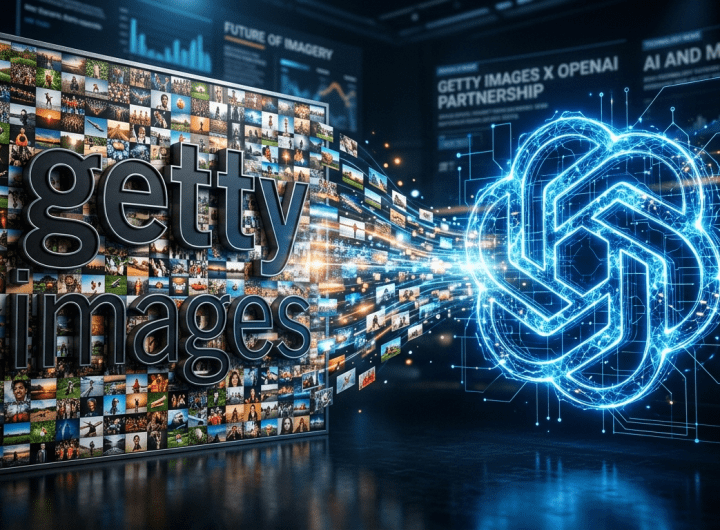 Getty Images Signed a Deal With OpenAI The Company It Spent Years Trying to Destroy
  What Is AGI Artificial General Intelligence in 2026 and Are We Already Living With It?