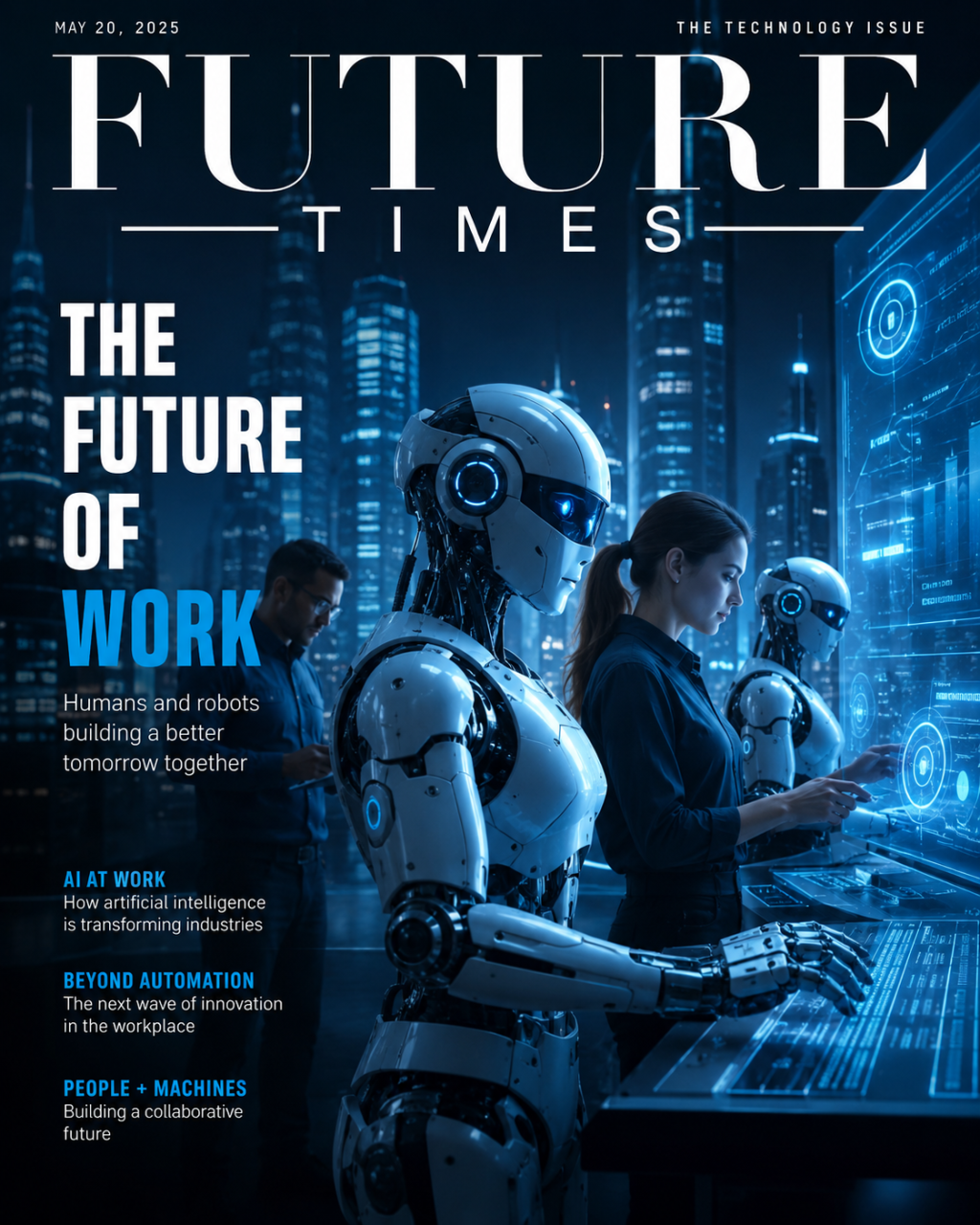
For years, humanoid robots felt like a technology that always belonged to the future.
They appeared in science fiction movies, technology conferences, and research laboratories, but rarely in places where ordinary people could see them in action. That is beginning to change.
A recent performance featuring multiple Unitree robots drew widespread attention online and quickly sparked debate across social media platforms and technology communities. While the robots themselves were performing a choreographed routine, the conversation that followed had very little to do with dancing.
Instead, people began discussing something much bigger: the future of work.
As humanoid robots become more capable, more affordable, and more visible, questions that once seemed distant are becoming increasingly relevant. What happens when robots can perform physical tasks traditionally done by humans? Which industries could be affected first? How quickly is robotics technology improving? And perhaps most importantly, are societies prepared for the changes that may follow?
These questions are no longer limited to researchers and engineers. They are becoming mainstream concerns.
The Unitree robot performance attracted widespread attention online and fueled discussions about robotics, automation, and the future of human labor.
Why Humanoid Robots Are Capturing Attention
The robotics industry has made significant progress over the past decade.
Modern humanoid robots can walk, balance, navigate environments, manipulate objects, and perform increasingly complex sequences of movements. While they are still far from replacing most human workers, the pace of development has accelerated dramatically.
Advances in artificial intelligence, computer vision, machine learning, sensors, and battery technology have all contributed to the rapid improvement of humanoid robots.
What makes today’s robots different from those of previous generations is not just their physical capability. It is their growing ability to interpret and respond to the world around them.
As AI systems become more sophisticated, humanoid robots gain access to better decision-making capabilities, improved navigation, and greater adaptability.
The result is a new generation of machines that appear increasingly capable of performing tasks once thought to be exclusively human.
Internet’s Growing Concern About Automation
The reaction to the Unitree robot performance revealed a recurring theme that appears whenever robotics technology makes headlines.
Many people immediately begin thinking about jobs.
Across online discussions, concerns about automation, unemployment, and economic disruption quickly emerged. Some users argued that humanoid robots could eventually replace large numbers of workers in industries involving repetitive physical labor. Others suggested that robotics could free humans from dangerous, exhausting, or undesirable work.
Both perspectives reflect a broader debate that has existed for decades.
Historically, technological innovation has often replaced certain jobs while creating entirely new industries and opportunities. The industrial revolution, computers, the internet, and smartphones all transformed labor markets in ways that were difficult to predict beforehand.
Humanoid robots may represent the next major chapter in that story.
Which Jobs Could Be Affected First?
Despite fears of widespread job replacement, experts generally believe that automation tends to affect specific tasks before entire professions.
Industries that involve repetitive, predictable physical work are often considered the most likely candidates for early robotics adoption.
These may include:
Warehousing
Manufacturing
Logistics
Inventory management
Basic assembly work
Certain agricultural tasks
In many of these environments, robots can operate continuously, perform repetitive movements with precision, and reduce workplace injuries.
However, jobs requiring creativity, emotional intelligence, complex social interaction, leadership, and human judgment remain significantly more difficult to automate.
The future of work is likely to involve collaboration between humans and machines rather than complete replacement.
Why AI Is Accelerating Robotics Development
One reason humanoid robots are attracting so much attention today is the rapid progress occurring in artificial intelligence.
A robot’s body is only part of the equation.
The real challenge has always been intelligence.
Modern AI systems allow robots to process information more effectively, understand instructions, recognize objects, and adapt to changing environments. These capabilities dramatically expand the potential usefulness of robotics systems.
As AI models continue improving, humanoid robots may become capable of handling increasingly complex real-world situations.
This combination of advanced hardware and intelligent software is what makes the current era of robotics different from previous waves of innovation.
The Future of Work Is Already Changing
Even before humanoid robots become common in workplaces, automation is already reshaping industries.
AI systems are helping write code, analyze data, generate content, assist customer service operations, and streamline business processes.
Humanoid robots represent the physical extension of that trend.
Instead of automating digital tasks, they have the potential to automate physical tasks.
The implications could be significant.
Businesses may gain efficiency. Productivity could increase. Certain goods and services may become less expensive to produce.
At the same time, governments, companies, and workers will need to adapt to a rapidly evolving technological landscape.
BEXORN Take
The most important lesson from the recent Unitree robot discussion isn’t that robots can dance.
It is that humanoid robots are no longer a distant concept.
People are beginning to see these machines operate in public, interact with environments, and perform increasingly sophisticated actions. As visibility grows, public conversations about automation, employment, and the future of work will only become more common.
The debate is no longer about whether robotics technology will improve.
It is about how society chooses to respond as it does.
Final Thoughts
Humanoid robots remain in the early stages of widespread adoption, but the direction of travel is becoming increasingly clear.
Advances in artificial intelligence, robotics engineering, and automation are creating machines that are more capable than ever before. While significant challenges remain, the progress being made is difficult to ignore.
Whether humanoid robots ultimately transform workplaces as dramatically as some predict remains to be seen. What is certain, however, is that the conversation surrounding robotics and the future of work has already begun.
And as these machines become more capable, that conversation is likely to grow much louder.
 9 Critical Reasons Humanoid Robots Are Advancing Fast — And the Future of Work Debate Has Already Begun
  App Store Ecosystem Reaches Record $1.4 Trillion as AI Apps Accelerate Growth
  7 Powerful Claude AI Effort Settings Tips Every Beginner Must Know