A single line in a changelog changed how Claude Code behaves for every developer who installs or updates it. The Claude Code v2.1.200 release, published July 3, 2026, switched the tool’s default permission mode from Auto to Manual across every surface it runs on the CLI, the VS Code extension, the JetBrains plugin, and the built-in help output. The company did not accompany the change with a blog post or a press release. It shipped quietly, in the same way a routine dependency bump might, even though it alters who authorizes what every time the agent runs.
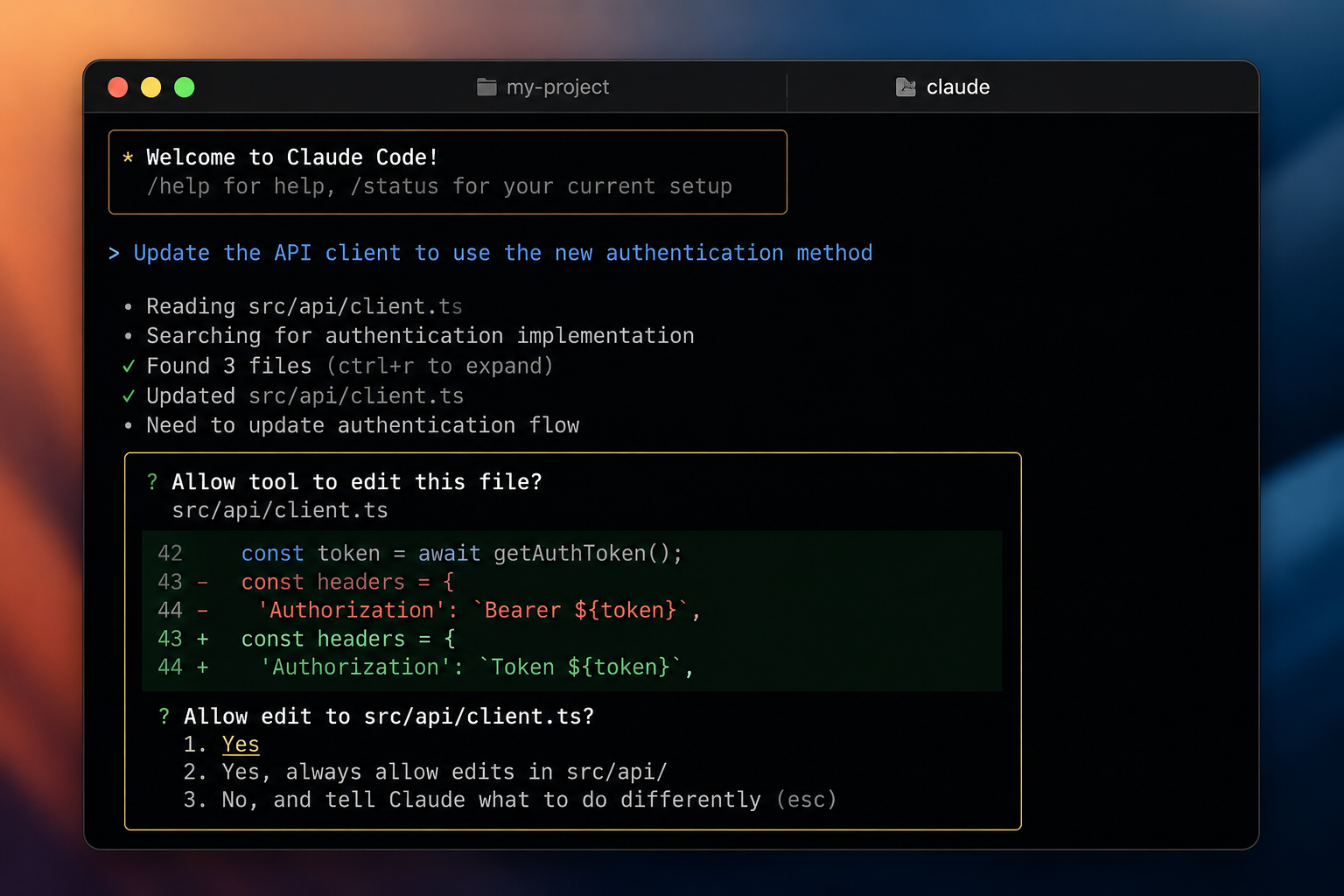
That distinction matters because of what Claude Code can actually do. It writes files, executes shell commands, and makes network calls on a developer’s machine. An agent with that level of access is no longer just a convenience feature. It becomes software that can materially affect a developer’s environment, which is precisely why the question of authorization has to be answered one way or another. The changelog line answers it by putting the decision back with the person at the keyboard, by default, unless that person deliberately chooses otherwise.
Why Manual Replaced Auto as the Default
The reasoning traces back to a problem security teams call approval fatigue. Claude Code’s original design required a human to sign off on every file write, shell command, or network call, on the theory that a person reviewing each action would catch mistakes before they happened. Internal telemetry told a different story: users approved roughly 93% of permission prompts. The pausing was happening. The actual reviewing mostly was not.
That pattern mirrors what happens in security operations centers, where analysts facing a constant stream of alerts eventually stop distinguishing real threats from routine noise. A permission dialog that fires dozens of times per session stops functioning as a decision point and becomes something closer to a reflex. Engineers had already tried to address this in March, when Auto mode first shipped a system where a separate classifier model, running on Claude Sonnet 4.6, evaluates each tool call for scope escalation, unfamiliar infrastructure, or signs of prompt injection before letting it proceed without a prompt.
Auto mode reduced the friction, but it also meant developers who never touched their settings could end up running an agent with meaningfully more autonomy than they realized. The July 3 change resets that baseline. Developers who want Auto mode’s reduced-prompt experience now have to choose it explicitly, either by passing permission-mode auto at startup or setting defaultMode in their configuration.
The Incidents That Shaped the Decision
This shift did not happen in a vacuum. In April, a GitHub issue filed against Claude Code documented a session that misread its instructions and deleted the wrong files, causing a production server outage along with data and revenue loss for the team involved. In June, Microsoft security researchers published findings showing that Claude Code’s GitHub Action could be manipulated through prompt injection to expose CI/CD secrets, including API keys and other runner credentials. Neither incident is an argument against agentic coding tools broadly. Both are arguments for knowing exactly what authorization model is running before handing an agent access to production systems.
The timing lines up with a broader industry conversation about agent oversight. “Blast radius” the maximum damage possible if something goes wrong has become the organizing idea behind this kind of agentic safety work, and the Manual default shrinks that radius for every new install. The update also puts Claude Code’s out-of-box behavior in line with the OWASP LLM Top 10’s recommendation for human-in-the-loop checkpoints on high-stakes agent actions, and with NIST’s preliminary guidance stating that a human should carry explicit responsibility for what an AI system does. Separately, on July 7, security vendor Radware announced expanded protections for developer-hosted AI agents, including Claude Code, a sign that enterprise security tooling is starting to treat coding agents as infrastructure worth defending rather than as isolated developer utilities.
Human Oversight Becomes the Default
Day to day, the change is easy to miss and easy to feel at the same time. A developer opening Claude Code for the first time after updating will notice more prompts, not fewer file edits, shell commands, and network calls that Auto mode would have quietly cleared now stop and wait for a click. That friction is the trade-off made explicit: fewer interruptions in exchange for more trust placed in a classifier model, or more interruptions in exchange for a human reviewing each consequential step.
The bet embedded in this default is that explicit consent beats silent automation, even when automation is well-designed. Auto mode’s classifier is genuinely capable of catching scope escalation and prompt injection attempts, and its safety checks are not going away. But a system that lets developers opt into more autonomy is structurally different from one that hands them autonomy unless they opt out, particularly when telemetry shows most people click through prompts without engaging with them. Manual mode does not solve approval fatigue by itself. It does, however, make sure that whoever is running an agent with elevated permissions arrived there on purpose.
This puts Claude Code somewhat at odds with the general direction of agentic coding tools, most of which have spent the past year competing to remove friction rather than reintroduce it. Cursor, Windsurf, and similar tools have leaned toward background execution and fewer prompts as a selling point. Anthropic’s move suggests a bet that, for a tool with this much reach into a developer’s machine, restraint is a more durable competitive position than convenience especially as agentic tools increasingly touch shared infrastructure like CI/CD pipelines rather than just a single developer’s local files.
The Bottom Line
Claude Code’s permission modes have not fundamentally changed Manual, Plan, Accept Edits, Auto, and Bypass Permissions all still exist, offering the same range from cautious to hands-off. What changed is which one a developer gets without making a choice. Telemetry showing a 93% approval rate was never evidence of careful review; it was evidence that review had quietly stopped. Resetting the default to Manual does not fix approval fatigue on its own, since a developer can still click through every prompt without reading it. But it does mean autonomy now has to be requested rather than assumed. As coding agents become more capable, the question is shifting from what they can do to who authorizes them to do it. This update suggests the company believes that decision should remain with the developer not the default settings.
external sources:
Claude Code v2.1.200 changelog and permissions documentation (code.claude.com); TechTimes report on the Manual default change; Microsoft Security research on Claude Code GitHub Action prompt injection; OWASP LLM Top 10 guidance on human-in-the-loop checkpoints






Leave a Reply